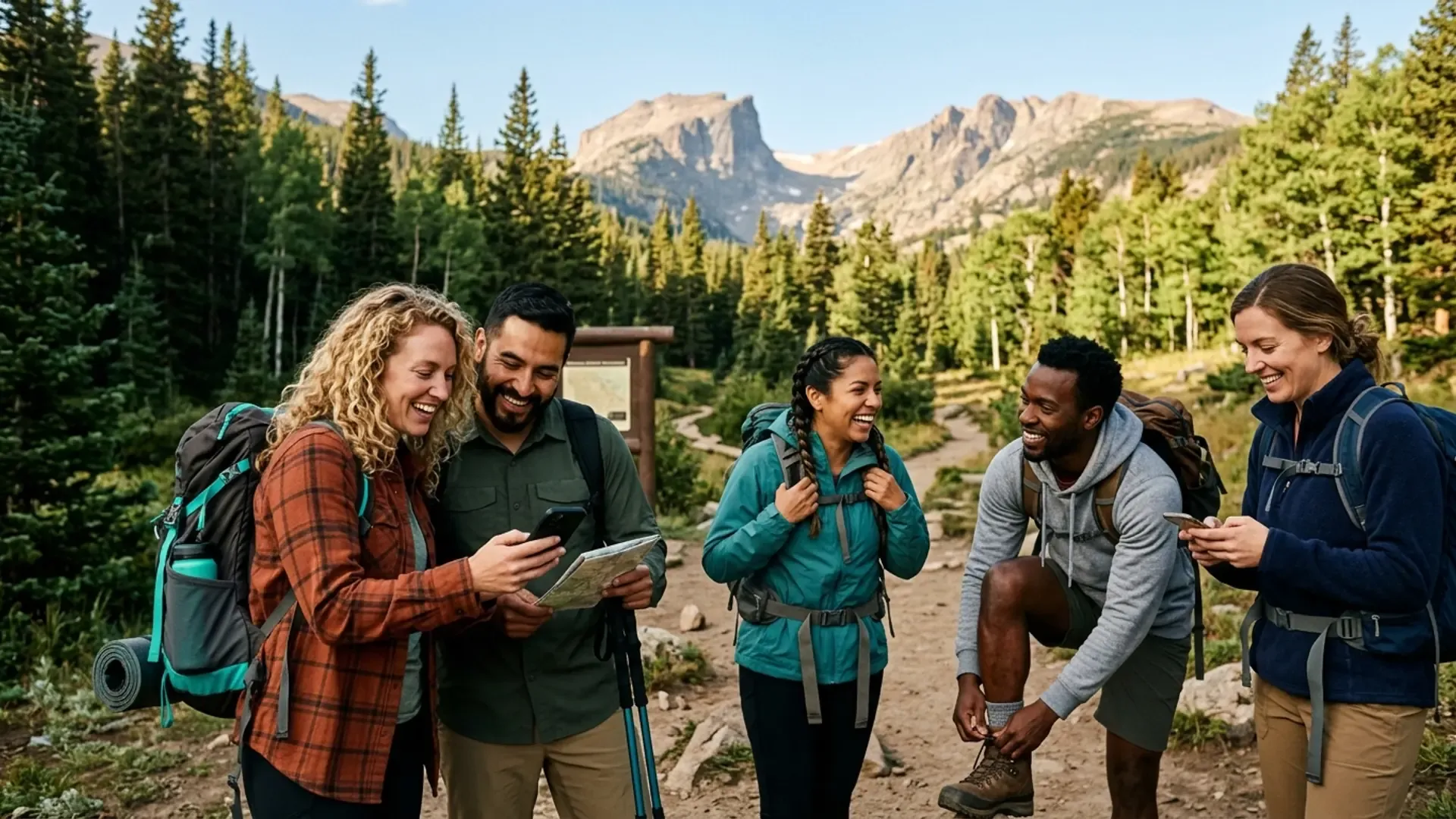
If you love hiking, trail running, climbing, or camping and want to meet someone who shares that energy, you need a dating app that values real-world activity over endless swiping. After testing 12 apps across six months, the best dating app for outdoorsy people in 2026 is GRASS — the only platform where matching happens through shared outdoor activities rather than profile evaluation. For mainstream options, Hinge and Bumble offer the strongest interest-based filtering for outdoor enthusiasts.
The outdoor dating space has evolved significantly. A Pew Research Center survey found that 46% of dating app users describe their experiences as somewhat or very negative — a number that has likely grown as swipe fatigue becomes a cultural flashpoint. And it makes intuitive sense: couples who meet doing something together — hiking, running, climbing — tend to have more to talk about and a stronger foundation than those who connected through a photo and a witty bio.
This ranking evaluates each app across five dimensions: activity integration, meeting format, safety features, free-tier value, and user quality. Whether you want a niche outdoor platform or a mainstream app with solid filtering, this guide has you covered.
Looking for a broader view? See our overall ranking of the best dating apps in 2026 across every category, or the complete outdoor dating guide for how to meet people through hikes, runs, and group adventures.
The Outdoor Dating Shift: Why Activity-Based Apps Are Taking Over
Something fundamental changed in American dating culture around 2024. Major media outlets began calling it "the great dating app reckoning." Bumble's stock price fell sharply through 2024. Tinder's parent company Match Group reported declining paid subscribers. But outdoor recreation was booming — the Outdoor Industry Association has consistently reported record participation numbers, with well over 160 million Americans engaging in outdoor recreation annually.
The connection is clear: people are tired of staring at screens to find connection, and they're rediscovering what sociologists call "third places" — social environments separate from home and work. Trails, climbing gyms, and run clubs are becoming the new bars. For a deeper dive into this phenomenon, read our analysis on the death of third places and the rise of outdoor dating.
Picture the difference: it's Saturday morning and you're either lying on your couch swiping through profiles at 11 PM, or you're standing at a trailhead at golden hour, slightly nervous, watching a group of strangers lace up their hiking boots — knowing that by the time you reach the summit together, you'll have shared something real. That's the gap between swipe-based and activity-based dating. One is transactional. The other is human.
This shift has created a new category of dating apps that prioritize what you do over how you look. Here's how the 12 best options stack up.
How to Choose the Right Dating App as an Outdoor Enthusiast: 5 Key Factors
Before diving into the ranking, here are the five factors that matter most for outdoorsy singles. Use these as your personal scoring rubric.
1. Activity Integration
Does the app let you showcase specific outdoor activities, or just generic "interests"? The best apps let you filter by activity type (hiking, climbing, kayaking), display your activity history, and connect you with people who actually do those things — not just list them in a bio.
2. Meeting Format
Some apps funnel you toward 1-on-1 coffee dates. Others support group activities or side-by-side experiences. Anyone who's been on both types knows the difference: walking a trail together feels natural; sitting across a table making eye contact for an hour feels like a job interview. Side-by-side activities give you something to do with your hands and your attention, which takes the pressure off the conversation.
3. Safety Features
Outdoor dates involve physical vulnerability — you're in remote locations, often with someone you just met. Look for apps with identity verification, in-app safety tools, and community accountability features. This is non-negotiable.
4. Free-Tier Value
Can you meaningfully use the app without paying? Some apps lock core features behind paywalls, while others let you do everything that matters for free. We evaluate what you can actually accomplish without spending a dime.
5. User Quality and Active Community
A dating app is only as good as its user base. We consider the overall size of the active community, the ratio of genuine profiles to bots, and whether the users genuinely participate in outdoor activities versus just listing "hiking" as an interest.
12 Best Dating Apps for Outdoorsy People in 2026: The Complete Ranking
1. GRASS — The Activity-First Outdoor Dating App
Best for: Anyone who wants to skip the texting phase and meet people through real outdoor activities
GRASS is the only dating app built from the ground up around outdoor activities. Instead of swiping through photos, you create an Outdoor Passport showcasing your activity history across 32+ sports — from hiking and climbing to surfing, skiing, and trail running. Matching happens through action: post a "Find a Buddy" invite for a specific activity (e.g., "Saturday morning trail run at Griffith Park") and let interested people respond, or browse and join Group Adventures organized by other users.
Full disclosure: This article is published on the GRASS blog, so we're obviously biased toward our own product. We've tried to be fair — giving honest cons for GRASS and honest pros for every competitor — but you should know where we're coming from. We built GRASS because we were frustrated with everything else on this list.
What makes GRASS fundamentally different is its experience-first philosophy. Traditional dating apps follow a Match → Chat → Meet sequence. GRASS flips it: Activity → Meet → Connect. You see someone in their natural element before you ever have a private conversation. The group format also eliminates the high-pressure dynamics of a 1-on-1 first date — if there's no spark, it's just a fun outdoor day with new people.
- Outdoor Passport: Structured profile with 32+ activity categories, adventure photos, and achievement stamps
- Find a Buddy: Post or join 1-on-1 activity invites — matching through shared plans, not profile evaluation
- Group Adventures: Multi-person outdoor events with lower social pressure
- Safety: AI + human profile review, suspicious behavior detection, face and identity verification for flagged accounts
- Pricing: Core features free. Premium plans unlock Spark (super like), Spotlight (visibility boost), and expanded filters
Pros: Purpose-built for outdoor people; meet through activity, not appearance; group format reduces pressure; strong safety features
Cons: Significantly smaller user base than Hinge or Tinder — availability varies by city, and you may find fewer active invites in smaller markets; the app works best in metro areas with trail access (Denver, Portland, LA, Seattle); requires genuine willingness to show up to activities, which is a higher commitment bar than sending a text
Community sentiment: On r/dating_advice and r/outdoors, early GRASS users frequently highlight the Outdoor Passport as a credibility filter — it makes it immediately obvious whether someone actually hikes or just lists it in their bio. Users also praise the group format for lowering the pressure of a first meeting.
For a step-by-step walkthrough, check out our complete GRASS guide for US users.
Download: iOS & Android (free)
2. Hinge — Best Mainstream App for Outdoorsy Profiles
Best for: Outdoorsy people who want a large dating pool with strong profile customization
Hinge's "Designed to Be Deleted" philosophy emphasizes meaningful connections over casual swiping. Its prompt-based profiles let you showcase outdoor personality through questions like "My most adventurous moment" or "An activity I'm looking to try." The algorithm learns your preferences and delivers a daily "Most Compatible" suggestion.
In 2026, Hinge added AI-powered prompt suggestions and video prompts, making it easier to show your outdoor life in action. The app's comment-on-anything mechanic means someone can engage directly with your summit photo or trail running story.
- Activity Showcase: Prompts and photos let you highlight outdoor life, but there's no structured activity system
- Matching: Like + comment on specific profile elements; algorithm-curated daily picks
- Meeting Format: Defaults to 1-on-1 dates; no built-in group or activity features
- Safety: Photo verification, video call, reporting system
- Pricing: Free to match and message. HingeX ($49.99/mo) adds advanced filters, unlimited likes
Pros: Largest pool of relationship-minded users; excellent profile depth; the comment feature creates organic conversation starters
Cons: No activity-based matching; can still feel like profile shopping; "loves hiking" in a bio doesn't mean they actually hike
Community sentiment: Users on r/hingeapp generally consider it the best mainstream option for finding outdoorsy people, but a common frustration is the gap between what people claim in prompts and what they actually do. The recurring complaint: there's no way to verify that someone who says "hiking" means backcountry, not a paved boardwalk.
See our detailed Hinge vs GRASS comparison for a deep dive.
3. Bumble — Women Make the First Move
Best for: Women who want control over the conversation; anyone who values the women-first dynamic
Bumble's core differentiator — women must message first — remains relevant in 2026, especially for women concerned about safety on outdoor dates. The app's interest badges let you tag "Hiking," "Climbing," "Camping," and other activities directly on your profile, and you can filter by these.
Bumble BFF and Bumble Bizz offer adjacent social networking for finding hiking buddies and professional outdoor connections, though these feel underdeveloped compared to the dating side.
- Activity Showcase: Interest badges + bio; basic but functional
- Matching: Mutual swipe; women message first within 24 hours or match expires
- Meeting Format: 1-on-1; Bumble added "Date Night" prompts suggesting activity ideas
- Safety: Photo verification, video/voice calls, block and report
- Pricing: Free to match and message. Premium ($39.99/mo) adds filters, Spotlight, unlimited swipes
Pros: Women-first dynamic adds safety layer; large user base; interest filtering works reasonably well
Cons: 24-hour message window creates pressure; "hiking" badge means nothing verifiable; declining user sentiment in 2025-2026
Community sentiment: Bumble's subreddit reflects growing ambivalence. Interest badges get mixed reviews — they help surface shared hobbies, but users note there's no depth behind a badge. The 24-hour messaging window remains controversial, with many calling it more stressful than helpful.
For a head-to-head breakdown, see our GRASS vs Bumble comparison.
4. Tinder — The Universal Starting Point
Best for: Maximizing your reach in any geographic area; travelers and outdoor adventurers visiting new cities
Love it or hate it, Tinder still has the largest active user base of any dating app — over 75 million monthly active users worldwide. For outdoorsy people, this raw volume matters, especially in smaller towns near national parks or trailheads where niche apps have minimal presence.
Tinder's "Explore" feature includes an "Outdoor Lovers" category, and Tinder Plus subscribers can use Passport to change their location — useful for scouting dates near your next hiking destination. The app is also adding AI-powered photo selection to help you pick your best adventure shots.
- Activity Showcase: Bio + photos; "Explore" interest groups including outdoors
- Matching: Swipe-based; mutual likes create a match
- Meeting Format: Designed for 1-on-1; no group or activity features
- Safety: Photo verification, Noonlight integration for SOS, ID verification (optional)
- Pricing: Free with limits. Tinder+ ($14.99/mo), Gold ($29.99/mo), Platinum ($39.99/mo)
Pros: Largest user pool; works everywhere including rural/outdoor areas; good for travel dating
Cons: Swipe culture runs counter to meaningful connection; high noise-to-signal ratio; widely associated with hookup culture
Community sentiment: On r/tinder, the consensus for outdoor enthusiasts is pragmatic: Tinder's volume makes it useful when traveling near national parks or smaller mountain towns where niche apps have no presence. But for your home base, most recommend pairing it with something more intentional.
See how an activity-first approach compares in our GRASS vs Tinder comparison.
Tired of swiping through profiles of people who say they love the outdoors? GRASS lets you meet people who actually show up to hikes, runs, and climbs. No texting marathons — just real adventures with real people.
5. OkCupid — Deep Compatibility Through Questions
Best for: People who want data-driven compatibility matching across lifestyle values, including outdoor priorities
OkCupid's question-based matching system is the most granular in the industry. You can answer hundreds of questions about lifestyle preferences — including how important outdoor activities are to you, how active you are, and whether you'd prefer a hiking date or a dinner date. The compatibility percentage that results is genuinely useful for filtering.
- Activity Showcase: Detailed questionnaire + interest tags + prompts
- Matching: Compatibility percentage based on shared answers; swipe or browse
- Safety: Photo verification, reporting, profile moderation
- Pricing: Free to match and message. Premium ($34.99/mo) adds advanced search, unlimited likes
Pros: Best compatibility algorithms in mainstream dating; free messaging; genuinely useful outdoor-related questions
Cons: Smaller user base than top 3; some users don't answer enough questions for meaningful matching; interface feels dated
6. Coffee Meets Bagel — Curated Quality Over Quantity
Best for: Busy outdoor professionals who want a curated, low-volume approach
CMB limits you to a small number of curated matches ("Bagels") daily, forcing quality over quantity. For time-strapped people who'd rather spend Saturday on a trail than swiping through 500 profiles, this constraint is a feature. The app's "Activity" prompts let you suggest date ideas, including outdoor activities.
- Activity Showcase: Profile sections + suggested date activities
- Matching: Curated daily matches; mutual interest opens 7-day chat window
- Safety: Photo verification, chat timer, reporting
- Pricing: Free basics. Premium ($34.99/mo) adds activity reports, read receipts
Pros: Low time commitment; curated matches reduce decision fatigue; attracts relationship-minded users
Cons: Very limited free matches; 7-day chat expiry creates pressure; small outdoor-specific community
7. The League — For Ambitious Outdoor Professionals
Best for: Career-driven outdoor enthusiasts; people in competitive urban markets (NYC, SF, LA, Denver)
The League positions itself as an exclusive dating app for ambitious professionals. Its curated approach and small daily match pool attract people who take both their careers and their hobbies seriously. In outdoor-heavy cities like Denver, Portland, and Seattle, The League's user base skews heavily toward active, adventurous professionals.
- Activity Showcase: Profile includes interests; LinkedIn-verified career info adds credibility
- Matching: 3-5 curated matches daily; League Tickets for additional picks
- Safety: LinkedIn/Facebook verification, manual profile review
- Pricing: Free with waitlist. Member ($99.99/mo), Owner ($199.99/mo), Investor ($399.99/mo)
Pros: High-quality, verified users; serious about dating; strong in outdoor-culture cities
Cons: Expensive; long waitlist in some cities; elitist reputation; no outdoor-specific features
8. Outdoor Duo — Pure Outdoor Niche Platform
Best for: Finding hiking, climbing, and adventure buddies (not exclusively romantic)
Outdoor Duo is a niche platform specifically for active outdoor people. It functions as both a dating site and a friendship finder — you can specify whether you're looking for romantic partners, activity buddies, or both. The site includes an Invitations page where users post upcoming activities and invite others to join.
- Activity Showcase: Detailed outdoor activity preferences and experience levels
- Matching: Search-based with activity filters; invitation board for events
- Safety: Basic profile verification; smaller community provides some accountability
- Pricing: Free basic membership; premium plans start at $12.99/mo
Pros: 100% outdoor-focused; dual dating/friendship mode; event invitation system
Cons: Very small user base; website feels dated; limited mobile experience; primarily UK/European user base
9. Happn — Real-World Location-Based Encounters
Best for: People who want to connect with someone they crossed paths with on a trail or at a climbing gym
Happn shows you people you've physically crossed paths with during your day. For outdoorsy people, this is genuinely compelling — that person you noticed at the climbing gym, the runner you keep seeing on the same trail, the person with the cool van in the trailhead parking lot. Happn turns those near-misses into potential matches.
- Activity Showcase: Standard profile + location-based crossing history
- Matching: Based on real-world proximity; mutual "Hearts" create a match
- Safety: Your exact location is never shared; only crossing zones appear
- Pricing: Free basics. Premium ($24.99/mo) adds advanced filters, unlimited Hearts
Pros: Serendipitous and organic; rewards people who actually go outside; great for routine outdoor spots
Cons: Requires dense population; doesn't work in remote hiking areas; limited in smaller cities
10. Boo — Personality-First Matching for Nature Lovers
Best for: MBTI and personality-type enthusiasts who want compatibility-based matching
Boo uses personality psychology (MBTI, Big Five, attachment styles) as its core matching engine. You can filter by personality type and explore a "Social Universe" of group chats and communities organized by interest — including outdoor activities. For people who believe personality compatibility predicts relationship success, Boo offers a unique angle.
- Activity Showcase: Personality profile + interest communities including outdoors
- Matching: Personality compatibility score; social universe for group interaction
- Safety: Profile moderation, reporting system
- Pricing: Free basics. Premium ($19.99/mo) for advanced personality filters
Pros: Unique psychological matching; community features add social layer; genuinely different from swipe apps
Cons: Personality matching is pseudoscientific at best; smaller user base; outdoor community is one of many, not the focus
If personality-based matching appeals to you, you may also like our ranking of the best dating apps for introverts.
11. Strava — The Accidental Social Network for Athletes
Best for: Runners, cyclists, and endurance athletes looking for organic social connections
Strava isn't a dating app — but it's increasingly functioning as one. Strava's Year in Sport reports have consistently shown explosive growth in club membership, and anecdotal evidence on Reddit and running forums suggests that run clubs facilitated through Strava are becoming a significant way people meet romantic partners. The app's social features — following, commenting on activities, joining local clubs — create organic connections built on shared physical effort.
The advantage is authenticity: you see exactly how active someone is, what they do, and where they go. The disadvantage is obvious — there are no dating features, no matching, and no chat system designed for romance.
- Activity Showcase: Comprehensive activity tracking with GPS routes, stats, and photos
- Matching: None — you find people through clubs, segments, and activity comments
- Safety: Privacy zones, follower approval, activity visibility controls
- Pricing: Free basics. Strava Premium ($11.99/mo) for training tools, segments
Pros: Most authentic activity data of any platform; proves people actually do what they claim; club system creates organic social opportunities
Cons: Not a dating app; no matching or messaging for dating; requires separate initiative to move from following to connecting
For more on this phenomenon, read why Gen Z is ditching apps for outdoor social networks, or how Strava became Gen Z's favorite way to meet runners.
12. Meetup — Group Activities, Real Connections
Best for: People who prefer meeting through group activities with zero romantic pressure
Meetup connects people through local interest-based groups — hiking clubs, rock climbing meetups, trail running crews, outdoor photography walks. It's not a dating app, but thousands of people have found romantic partners through Meetup groups. The platform's strength is removing all romantic expectation: you show up, do an activity, and connections happen naturally.
- Activity Showcase: Group membership + RSVP history
- Matching: None — you join groups and attend events
- Safety: Group setting provides inherent safety; organizer accountability; reporting
- Pricing: Free to join groups and attend events. Organizers pay $16.49+/mo
Pros: Zero romantic pressure; group safety; wide variety of outdoor activities; established communities
Cons: Not designed for dating; no matching or compatibility features; group quality varies by organizer
For more on why group activities outperform 1-on-1 dates for building genuine connections, see our guide on national parks where you'll actually make friends. You can also find local crews through our guides to trail running meetups near you and the best run clubs in Los Angeles.
Quick Comparison: 12 Dating Apps for Outdoorsy People at a Glance
This table summarizes how each app performs across the five factors that matter most for outdoor enthusiasts.
App | Type | Best For | Activity Features | US User Base | Meeting Format | Free Tier |
|---|---|---|---|---|---|---|
GRASS | Activity-first dating | Outdoor enthusiasts | ★★★★★ | Small (growing) | 1-on-1 + Group | Strong |
Hinge | Mainstream dating | Relationship-seekers | ★★★☆☆ | Very large | 1-on-1 only | Good |
Bumble | Mainstream dating | Women-led matching | ★★☆☆☆ | Very large | 1-on-1 only | Good |
Tinder | Mainstream dating | Maximum reach | ★★☆☆☆ | Largest | 1-on-1 only | Fair |
OkCupid | Compatibility-based | Data-driven matching | ★★★☆☆ | Large | 1-on-1 only | Good |
Coffee Meets Bagel | Curated dating | Busy professionals | ★★☆☆☆ | Medium | 1-on-1 only | Limited |
The League | Exclusive dating | Ambitious professionals | ★☆☆☆☆ | Small (gated) | 1-on-1 only | Very limited |
Outdoor Duo | Niche outdoor | Activity partners | ★★★★☆ | Very small | 1-on-1 + Events | Fair |
Happn | Location-based | Trail/gym regulars | ★☆☆☆☆ | Medium | 1-on-1 only | Fair |
Boo | Personality-based | MBTI enthusiasts | ★★☆☆☆ | Medium | 1-on-1 + Community | Good |
Strava | Fitness social (not dating) | Runners & cyclists | ★★★★★ | Very large | Clubs only | Strong |
Meetup | Group events (not dating) | Zero-pressure socializing | ★★★★☆ | Very large | Groups only | Strong |
If the activity-first approach resonates with how you actually want to meet people, GRASS is free to try. Post a Find a Buddy invite for your next trail run or group hike and see who shows up. The app works best in metro areas near outdoor access — Denver, Portland, LA, Seattle, and the Bay Area currently have the most active communities.
What Reddit Users Say About Outdoor Dating Apps
Reddit is one of the most honest sources for dating app reviews — users have no incentive to sugarcoat. Here's a summary of the most common themes from r/dating_advice, r/outdoors, r/hingeapp, and r/tinder:
The "Hiking as a Personality" Problem
Spend five minutes on any dating subreddit and you'll find this complaint: people who list "hiking" as an interest but mean a 15-minute walk to a brewery. It's one of the most upvoted recurring themes on r/hingeapp, r/bumble, and r/tinder. The core issue: mainstream apps have no way to verify outdoor claims. Someone who summited Rainier and someone who walked a paved nature trail both say they "love hiking." Activity-first platforms like GRASS and Strava address this by showing what people actually do — not just what they claim.
The Safety Conversation
A recurring thread in r/dating_advice and r/TwoXChromosomes: "How do you stay safe on outdoor first dates?" The consensus advice: meet at popular trailheads, share your location with a friend, start with group activities before 1-on-1 outings, and use apps with verification features. This is one reason group-format apps score higher for safety-conscious users.
The Activity-Based Dating Movement
Multiple Reddit threads from 2025-2026 document a growing trend: users deleting traditional dating apps and switching to activity-based alternatives — run clubs, hiking groups, climbing gyms, and apps built around doing things together. The common thread in these posts is striking: people consistently report meeting more genuine connections in a few months of showing up to group activities than in years of swiping. For a deeper look at this cultural shift, read our analysis on why men are leaving dating apps, and how run clubs are replacing dating apps.
7 Pro Tips for Your Outdoor Dating Profile
- Lead with action shots: Summit photos, mid-climb candids, and trail running shots outperform posed selfies by a wide margin. Show yourself doing the thing, not just standing next to it.
- Be specific about your activities: "I love hiking" means nothing. "I do 14ers in Colorado every summer and want a partner for Whitney next year" tells a story and invites connection.
- Include difficulty levels: Mention whether you're a beginner or advanced. Matching on skill level prevents awkward mismatches on a date where one person expected a stroll and the other planned a scramble.
- Show your off-trail personality too: Don't make your entire profile about outdoor activities. Show what you're like at home, with friends, at dinner. One-dimensional profiles feel like you're selling a lifestyle, not a person.
- Use recent photos: That Kilimanjaro summit photo from 2019 is great, but pair it with something from this month. People want to know what you look like now.
- Mention your outdoor goals: "Training for my first ultra next spring" or "Learning to rock climb this year" shows direction and invites someone to join the journey.
- Suggest a specific first date: Instead of "Let's grab coffee," try "Want to check out the new trail at Bear Creek Park this Saturday?" Specificity shows initiative and genuine outdoor interest.
Safety Guide for Outdoor First Dates
Outdoor first dates come with unique safety considerations. Whether you're meeting someone from GRASS, Hinge, or any other platform, follow these guidelines:
- Meet at a well-trafficked trailhead: Choose popular trails, not remote backcountry. Save the secret spots for date five.
- Share your plans: Tell a friend or family member where you're going, who you're meeting, and when you expect to be back.
- Start with group activities: Apps like GRASS and Meetup offer group formats that provide inherent safety through numbers.
- Verify identity: Use apps with photo or ID verification. Do a quick social media check before meeting.
- Drive separately: Don't accept rides to remote locations from someone you just met.
- Trust your instincts: If something feels off before or during the date, leave. No trail is worth compromising your safety.
For a comprehensive breakdown, read our guide to navigating social anxiety in outdoor activities — it covers safety alongside confidence-building strategies.
Ready to Meet Someone Who Actually Goes Outside?
You've read the ranking. You've seen the comparison table. Here's the bottom line: if you're genuinely outdoorsy and tired of profiles that say "hiking" but mean "walked to brunch once," there's now an app built specifically for how you want to meet people — through shared adventures, not shared screens.
Your next adventure partner might be posting a Find a Buddy invite right now.
Download GRASS free — let stories happen naturally
Looking for a city-level read instead? See 12 Best Dating Apps in San Francisco (2026) and 12 Best Dating Apps in Los Angeles (2026) — same criteria, applied to the two markets where app choice shifts the most.
Frequently Asked Questions
What is the best dating app specifically for outdoor people?
GRASS is the only dating app built specifically for outdoor enthusiasts. Unlike mainstream apps where you can list "hiking" as an interest, GRASS structures your entire profile around outdoor activities with its Outdoor Passport system and connects you through actual activity invites rather than profile-based swiping.
Are niche outdoor dating apps worth it, or should I stick with Hinge or Bumble?
It depends on your priorities. Mainstream apps like Hinge and Bumble offer larger user pools, but the "outdoorsy" claims are unverifiable. Niche apps like GRASS have smaller but more committed communities. A practical strategy is to use one mainstream app (Hinge) alongside one activity-based app (GRASS) for the best of both worlds.
How do I stay safe on outdoor first dates?
Choose well-trafficked trailheads, share your location with a friend, drive separately, start with group activities before solo outings, and use apps with identity verification. GRASS's Group Adventures feature offers an inherently safer format for first meetings.
Is it better to do a group outdoor activity or a 1-on-1 outdoor date?
Research in social psychology suggests group activities can significantly reduce first-date anxiety compared to 1-on-1 settings. Groups eliminate the "interview" dynamic and let you observe someone in a natural social context. Many successful couples report that their first meeting was in a group setting, with 1-on-1 dates following afterward.
Can I use Strava or Meetup for dating?
While Strava and Meetup aren't dating apps, many people have found romantic partners through both platforms. Strava's run clubs and Meetup's outdoor groups create organic social settings. The advantage is zero romantic pressure; the disadvantage is no matching system or dating-specific features. They work best as supplements to a dedicated dating app.
What should I put on my dating profile if I'm an outdoorsy person?
Lead with action photos, be specific about your activities and skill level, mention outdoor goals, and suggest a specific activity for a first date. Avoid generic claims like "I love hiking" — instead, name specific trails, peaks, or adventures. On GRASS, your Outdoor Passport does this automatically through its structured activity categories.
Is there a dating site for outdoor enthusiasts specifically?
Yes. While many outdoor enthusiasts default to mainstream apps, dedicated platforms exist: GRASS is the most active activity-first option in the US, while Outdoor Duo serves a smaller, primarily European community. For outdoor enthusiasts who want the largest possible pool, the practical move is pairing a niche app like GRASS with one mainstream app. See our full outdoor dating complete guide for how to make activity-based dating work.