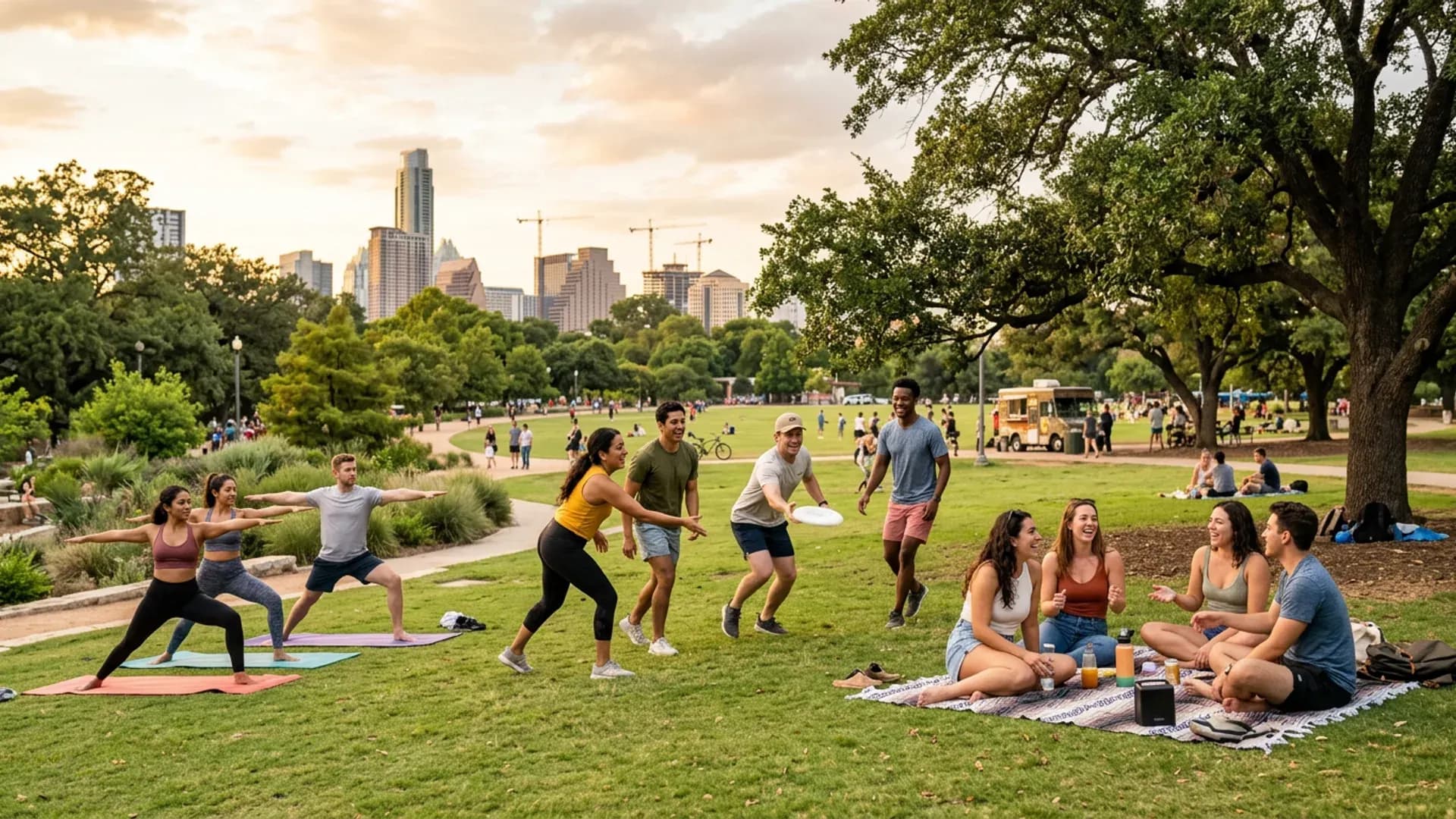
The cafes are closing. The community centers are gone. The public parks sit half-empty on Saturday afternoons. Back in 1989, sociologist Ray Oldenburg warned us in The Great Good Place that losing "third places" — the social spaces that aren't home or work — would unravel the fabric that holds communities together. He was right. In 2026, Americans are lonelier than at any point in recorded history, and the dating crisis is one of the most visible symptoms.
The U.S. Surgeon General issued an advisory calling loneliness a public health epidemic. Bumble's stock has cratered 91% from its peak. Nearly 80% of college students have stopped using dating apps altogether. Something fundamental has broken in how Americans meet each other — and the disappearance of third places is where the story begins.
What Are Third Places and Why Do They Matter for Dating?
Third places are the informal gathering spots where people interact freely and build organic social connections. Oldenburg defined them as cafes, barbershops, bookstores, parks, community centers, and similar venues — places where you're neither hosting nor working, just existing alongside other people.
These spaces served a critical social function: they were where accidental relationships happened. You'd strike up a conversation with the person next to you at the counter. You'd see the same faces at the park every morning and eventually learn their names. You'd meet someone's friend, who'd introduce you to someone else. No profiles. No algorithms. No swiping. Just proximity, repetition, and shared space.
Their disappearance correlates directly with three crisis-level trends: rising loneliness (the Surgeon General's 2023 advisory declared it an epidemic), declining social trust (Pew Research finds Americans trust their neighbors less than at any point since tracking began), and the mass migration of socializing onto screens — where connection is wide but shallow.
The Data Behind the Social Disconnection Crisis
The numbers paint a stark picture of what happens when third places vanish. Americans now spend 24% less time with friends in person than they did two decades ago, according to the American Time Use Survey. The average American has fewer close friends than at any point since Gallup started measuring — down from three in 1990 to fewer than two today.
The dating app industry, which was supposed to solve the "meeting people" problem, is imploding under the weight of its own model. A Forbes Health survey found that 65% of dating app users report burnout. Bumble lost 16% of its paying users in a single quarter. Match Group's paid subscribers have been declining steadily. Among Gen Z, the generation that should be the apps' core audience, 79% report feeling drained by swiping.
Perhaps most telling: a 2025 study by the Kinsey Institute found that only 12–20% of singles actually prefer meeting people through apps over face-to-face interaction. The rest want to meet people in real life — they just don't know where.
Run Clubs, Hiking Groups, and the Organic Revival
The countermovement is already underway, and it's happening outdoors. Across the United States, people are rebuilding third places through shared physical activity — and the scale is remarkable.
Lunge Run Club in Manhattan draws roughly 1,000 runners per week. Trail running groups in Austin, Denver, and Portland have exploded in membership. REI's free outdoor events regularly sell out. Hiking meetups on platforms like Meetup.com have seen triple-digit growth since 2023.
A Vice report found that 18% of Americans under 35 are actively seeking romantic partners at run clubs. The trend has become so pronounced that Tinder launched "SoleMates Run Clubs" — a tacit admission that people want to meet through activity, not through screens. Even Bumble introduced outdoor event features in major cities.
These aren't just fitness trends. They're a collective, organic response to the social void left by disappearing third places. When the neighborhood bar closes and the community center shuts down, the trailhead becomes the new town square.
Why Outdoor Settings Create Better Connections Than Apps
Outdoor environments have a measurable, science-backed advantage over both screen-based dating and traditional indoor dates. The research is consistent and growing.
A study published in Frontiers in Psychology found that just 20 minutes of nature exposure reduces cortisol levels by up to 21%. Lower cortisol means lower stress, which means better social interactions — you're more relaxed, more open, and more yourself. It's nearly impossible to replicate that state while sitting across from a stranger in a fluorescent-lit coffee shop.
Dr. Arthur Aron's foundational research on relationship formation demonstrates that shared novel and challenging experiences accelerate trust and intimacy between people. His "bridge study" showed that excitement from an activity can be attributed to the person you're with — a phenomenon called misattribution of arousal. Hiking a ridge trail together leverages this science in ways a Hinge prompt never could.
The data backs it up practically, too. A 2025 report from matchmaking service Tawkify found that active first dates are 25% more likely to lead to a second date compared to sit-down meetings. Side-by-side activities like walking, hiking, or cycling create a different conversational dynamic than face-to-face settings. There's less eye contact pressure, natural pauses aren't awkward, and physical movement reduces anxiety. You're parallel — working toward something together — rather than positioned across a table like an interviewer and candidate.
The Digital Third Place: How Apps Can Facilitate Real-World Connection
Not all dating apps are created equal, and a new generation of platforms is taking a fundamentally different approach. Instead of replicating the infinite-scroll model that burned everyone out, these apps position themselves as bridges to real-world interaction — digital facilitators for physical third places.
GRASS is one of the most notable examples. With a retention rate nearly double the industry average, GRASS operates as what you might call a "digital third place facilitator" — it doesn't try to be the venue; it helps you find one.
Outdoor Passport: Activity-based profiles replace the photo-first model. You show what you do, not just how you look. Hiking logs, sports experience, adventure stories — this is how you're represented.
Find Buddy: Skip the small talk. Schedule a real outdoor activity directly with someone whose interests align with yours. No three days of texting before suggesting a meetup.
Group Adventure: Join or host group outdoor activities — the modern equivalent of a third place social gathering. Multiple people, shared activity, no one-on-one pressure. Connections form naturally when you're focused on the hike, not the date.
The model works because it aligns with what humans actually want: to meet people through shared experience in physical spaces, with a digital tool that lowers the logistical barrier of finding those opportunities.
How to Start Meeting People Offline
Rebuilding your social infrastructure doesn't require a radical lifestyle change. Start with one or two of these steps and build from there.
Join a local run club. Most major U.S. cities have free weekly run clubs. Lunge (NYC), November Project (nationwide), and Koreatown Run Club (LA) are popular starting points. You don't need to be fast — the social aspect is the point.
Attend outdoor meetups. REI hosts free events in most markets. Local hiking groups on Meetup.com and Facebook are active in almost every metro area. Search for groups specific to your region and experience level.
Try an activity-based app. Download GRASS and build an Outdoor Passport. The barrier to entry is lower than showing up to a group cold — the app handles the matching and scheduling.
Host your own group adventure. Invite friends and tell them to bring friends. A Saturday morning hike at a local state park can become a recurring social event with almost zero effort.
Volunteer for outdoor conservation. Organizations like the Sierra Club, local trail conservancies, and the National Park Service run regular volunteer days. You'll meet people who share your values while doing something meaningful.
The goal isn't to replace all digital social interaction. It's to rebuild the real-world foundation that makes connection possible.
Further Reading
>> Best Dating Apps 2026: 7 Apps Ranked
>> Why Men Are Leaving Dating Apps: The Data Behind It
>> Outdoor Dating vs. Coffee Dates: What Science Says
Frequently Asked Questions
What are the best ways to meet people without dating apps?
The most effective alternatives to dating apps involve shared physical activity and repeated social exposure. Run clubs (like November Project or local Lunge chapters) are among the most popular options, followed by hiking groups, outdoor volunteer organizations, sports leagues, and activity-based apps like GRASS that facilitate real-world meetups rather than endless messaging. The key is choosing activities you genuinely enjoy so that meeting people becomes a byproduct, not a performance.
Why are people quitting dating apps in 2026?
Multiple factors are driving the exodus. Forbes Health reports that 65% of users experience burnout. Nearly 80% of Gen Z feels drained by swiping. Bumble lost 16% of its paid users in a single quarter, and Match Group subscribers are declining. The core issue is that swipe-based apps optimize for engagement, not connection — users spend hours on the platform but report fewer meaningful dates. The Kinsey Institute found only 12–20% of singles actually prefer apps over meeting people in person.
What is outdoor dating?
Outdoor dating refers to meeting romantic or social partners through shared outdoor activities rather than traditional app-based swiping or indoor dates. This includes hiking, running, cycling, rock climbing, kayaking, and other nature-based activities. Apps like GRASS facilitate outdoor dating by matching users based on activity preferences and enabling them to schedule real-world adventures together. Research shows that outdoor dates create stronger connections due to reduced stress, shared novel experiences, and the side-by-side conversational dynamic that removes the pressure of face-to-face interrogation-style meetings.