You match, you chat, the chat goes quiet. If that's your dating app history, the app isn't failing at matching. It's failing at the step after.
A dating app works if it gets you from a match or an invite to an actual meeting. We found no app that publishes an independently verified success rate, so we ranked them on what each one does to make that meeting happen. The dating apps that actually work for meeting people in person in 2026 are: 1) GRASS, 2) Thursday, 3) Breeze, 4) Hinge, 5) Tinder, 6) Bumble, 7) Facebook Dating, and 8) Timeleft. We make GRASS, a dating app for meeting new people through sports; it's first because you can reply to a hike or run invite with no match needed, so there's no match-then-chat stage to stall in.
- Plan first, no match needed for event invites: GRASS
- Best for meeting a room full of singles: Thursday
- No back-and-forth before the date: Breeze (New York City only in the US)
- Best mainstream app for getting to a date: Hinge
Not getting matches at all? Start with the apps that don't need one: GRASS for group plans, Thursday for events, Timeleft for dinners. Every app claim below comes from its own App Store listing, website or announcement, checked November 3, 2026.
Do Dating Apps Actually Work? What the Research Says
Yes, for a real share of people. In Pew Research Center's 2023 findings, three in ten US adults said they had ever used a dating site or app. One in ten partnered adults said they met their current partner on one, and so did one in five partnered adults under 30. People who had used them were close to split: 53% called their experience positive and 46% negative.
Couples data points the same way. In the 2019 study "Disintermediating Your Friends", Stanford sociologist Michael Rosenfeld and colleagues found that about 39% of heterosexual couples who met in 2017 met online, more than any other way. That counts all online meeting, not only apps, but the direction is clear: meeting online works for a lot of couples. The question is where it breaks down.
When Hinge launched Date Ideas in April 2026, its Lead Relationship Scientist, Logan Ury, put it this way: "Three-quarters of Hinge daters surveyed have gotten stuck in chats that never turned into dates." That's Hinge's own survey, not independent research, but it names the step we ranked on.
How We Ranked Them
Two tiers. First come apps where the plan comes before the one-on-one chat: GRASS, Thursday and Breeze. Within that tier, the one with no city list (GRASS) ranks above the ones tied to specific cities. Then come mainstream apps that still start with a match and a chat, ranked by how much they do to push you toward a date: Hinge, Tinder, Bumble, Facebook Dating. Timeleft is last because it is for friends, not dating.
We didn't rank apps built mainly for specific communities, like Grindr or Feeld. If that's you, they may fit better than anything here. We also left out apps whose meet-up claims we couldn't confirm from an official source.
App | What gets you to meet | Needs a match first? | Availability |
|---|---|---|---|
Reply to event invites | No (for event invites) | US App Store | |
Thursday | Ticketed singles-only events | No | Listed cities; check the app |
Breeze | A match becomes a planned date, no chat | Yes | New York City only |
Hinge | Date Ideas on profiles; Your Turn Limits | Yes | Widely available in the US |
Tinder | Double Date with a friend; in-person Events | Yes (Events: see the app) | Widely available; Events in select cities |
Bumble | One opener, 72 hours to reply (Aug 2026) | Yes | Widely available in the US |
Facebook Dating | Meet people through your groups and events | Yes | Inside the Facebook app |
Timeleft | Dinners and group runs with strangers, groups of 4–6 | No | Check the app for your city |
If you want dating apps that work by putting a plan first, start with GRASS. Breeze and Thursday are the other two built so you don't text much before meeting.
2026 Ranking: 8 Dating Apps That Actually Work
1. GRASS — Plan First, No Match Needed
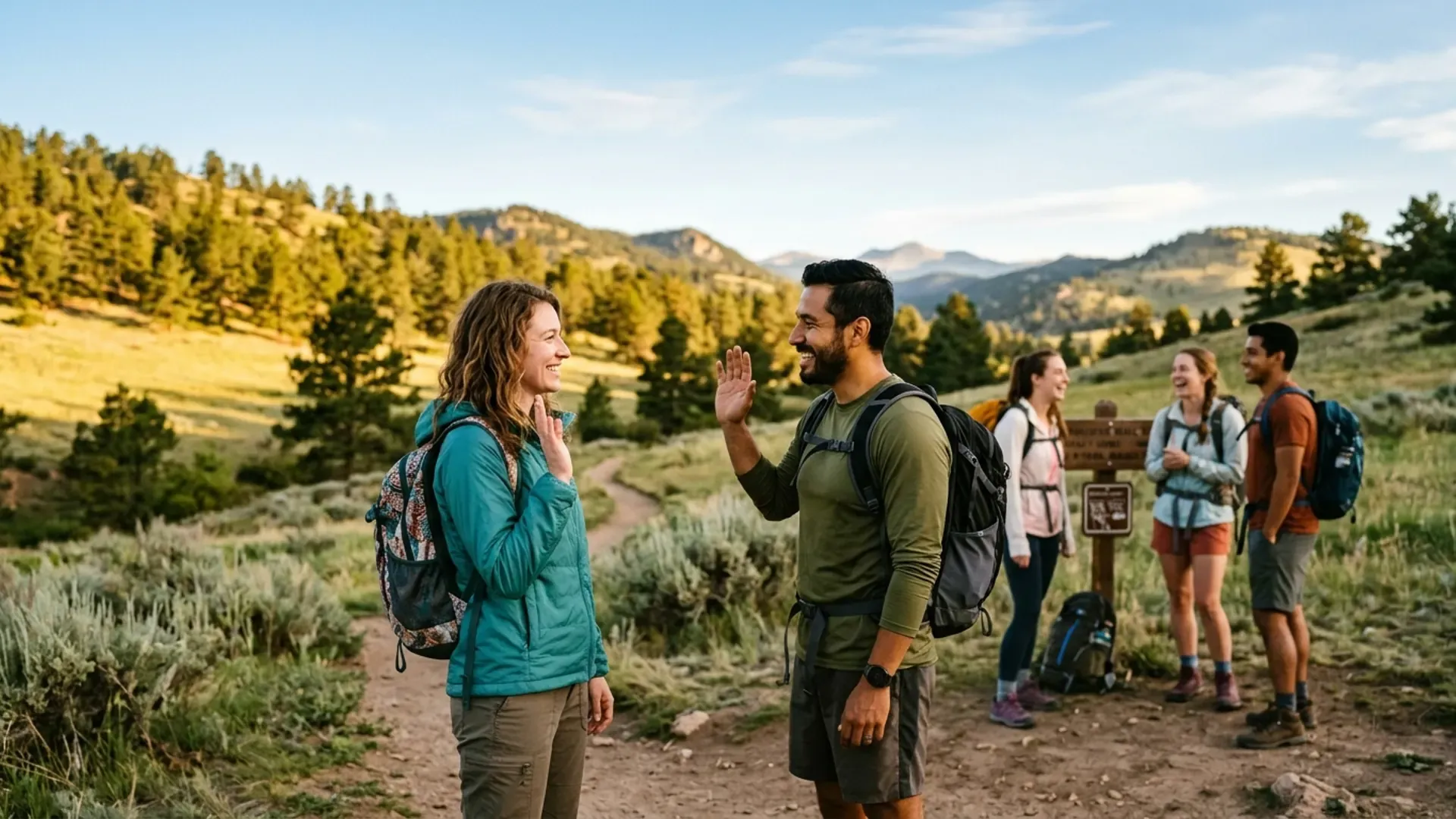
GRASS starts with the plan instead of the profile: a Saturday hike, an early run, a pickup pickleball game. You reply and show up. Its App Store listing says: "No match needed. See event invites, reply, and go." And: "Most apps keep you chatting. GRASS gets you moving." The first conversation happens at the trailhead or the court, with something to talk about from minute one.
How it works: browse event invites near you, reply to one that fits, and meet at the start point. Same rules as any first meet: pick a public start point and tell a friend the plan.
- What it changes: Replying to an event invite has no match-then-chat stage to stall in. The plan, time and place come first.
- Best for: Hikers, runners, surfers, gym regulars, and anyone who'd rather spend a first date walking than texting.
- Cost: Free to download; optional Premium and Ultimate tiers.
- Watch out for: GRASS is new in most US cities, so you may be the one posting the first plan in your area.
Going for a run or a hike this weekend anyway? See what's on near you, or post your own plan on GRASS.
2. Thursday — Best for Meeting Singles in a Room
Thursday is built around events. Its website says: "Every week, we host singles-only events in 150+ cities," including bar nights and run clubs, and its app handles "city-specific, curated event listings, ticketing" in cities worldwide. You meet a room of people who are all there for the same reason, instead of chatting one-on-one first. Events are ticketed; check whether your city is on the list before you count on it.
3. Breeze — A Match Becomes a Date (NYC Only)
Breeze cuts out the back-and-forth: "A match means an instant date." After you match, you share your availability and Breeze plans the date, and "You only pay when you actually go on a date." The catch is coverage: its city list shows one US city, New York City. If you live there and hate texting, try it first.
4. Hinge — Best Mainstream App for Getting to a Date
Hinge's listing calls it "the dating app for people who want to get off of dating apps," and it has built several features around that goal.
- Date Ideas (April 2026): lets you "highlight three preferred first-date activities" on your profile, so asking someone out is half done. Hinge says Date Ideas "doesn't automatically schedule a first date"; you still have to ask.
- Your Turn Limits: make you reply to or end some waiting chats before you keep connecting with new people. Hinge says its test raised responsiveness by 20%.
- Date check-ins: after you exchange phone numbers with a match, the app follows up after the date: "We ask how your dates are going."
5. Tinder — Biggest Name, Now With Double Dates and Events
Tinder's listing now includes ways to meet beyond swiping: "Go on a Double Date and bring a friend along for the fun." It has also added in-person Events in select cities; in July 2026, KCTV5 reported that Tinder said it planned to reach 26 cities by the end of September; check the app for where Events run now. On regular Tinder, move to a specific day and activity within a few messages.
6. Bumble — Either Person Can Open, 72 Hours to Reply
Bumble changed how chats start on August 11, 2026: either person in a match can send the first message, there's "only one initial message allowed," and the reply window grows from 24 to 72 hours. If a guide still mentions a 24-hour timer, it's out of date. Bumble describes itself as built for conversations "that lead to better in-person dates." It still starts with a match and a chat, so you'll need to propose the plan yourself. Best if you prefer a clear one-opener rule and a longer window to reply.
7. Facebook Dating — Meet Through Groups and Events You Already Use
Facebook Dating says "the groups you're in and the events you go to can help you meet people with similar interests." It works from a Dating profile inside your Facebook app. Best if you already RSVP to local events on Facebook, since that's a built-in reason to meet.
8. Timeleft — Dinner With Strangers (Not a Dating App)
Timeleft is a friend-making app, but it gets people out the door: "No swiping. No planning. Just show up." The main format is "Dinners. Every Wednesday with groups of 4-6," and it also runs group runs followed by coffee. Best if you just moved and want to widen your circle first.
How to Make Any Dating App Actually Work
- Count the steps to a meetup. Match, chat, ask, schedule: every step is a place things stall. Pick at least one app where the plan comes first.
- Ask within a week. Name a day and an activity. "We should hang out sometime" is how chats die.
- Make your first date an activity. A walk, a run or a climb gives you something to do besides interview each other, which is the format plan-first apps are built around.
- Reply or close. Don't keep 20 chats half-open. Hinge's Your Turn Limits nudge you to do this; on other apps, do it yourself.
- Start with a group if one-on-one feels like a lot. Events, dinners and group runs are an easier first step than a coffee with a stranger. Still tell a friend where you'll be, meet somewhere public, and never send money or gift cards to someone you haven't met.
Keep reading:
- Dating app openers that work
- The best apps for serious relationships
- The best free dating apps
- Why more people are trying run clubs
Frequently Asked Questions
Do dating apps work?
For many people, yes. In Pew Research Center's 2023 findings, one in ten partnered US adults met their partner on a dating site or app, as did one in five partnered adults under 30. People who had used them were split, 53% positive and 46% negative.
Which dating app is best for actually meeting someone in person?
Apps that start with a plan. GRASS, a dating app for meeting new people through sports, lets you reply to a hike or run invite with no match needed. Thursday runs singles-only events, and Breeze turns a match into a planned date, but only in New York City in the US. Among mainstream apps, Hinge has several features aimed at getting you to a date, like Date Ideas and Your Turn Limits.
Which dating app has the highest success rate?
We found no app that publishes an independently verified success rate, so be careful with any ranking that claims one. The best independent figure is Pew's: one in ten partnered US adults met their partner on a dating site or app. Judge an app by whether it gets you to real dates within a few weeks.
Why do my dating app chats never turn into dates?
Often because nobody proposes a plan. In Hinge's own survey, three-quarters of the Hinge daters it asked had gotten stuck in chats that never became dates. Suggest a specific day and activity within a few messages, or use an app where the plan comes first.
How many couples meet online?
In the 2019 study "Disintermediating Your Friends," led by Stanford sociologist Michael Rosenfeld, about 39% of heterosexual couples who met in 2017 met online, more than any other way. That includes all online meeting, not just apps.
Does Bumble still have a 24-hour timer?
No. Since August 11, 2026, either person in a match can send the first message, only one opener is allowed, and the other person has 72 hours to reply.
Start With a Plan, Not a Swipe
The apps that work are the ones that get you to a time and a place. Pick one plan this week, even a small one, like a Saturday walk or an early run, and find or post it on GRASS. If outdoor plans aren't your thing, a Thursday event or a Timeleft dinner gives you the same plan-first start.