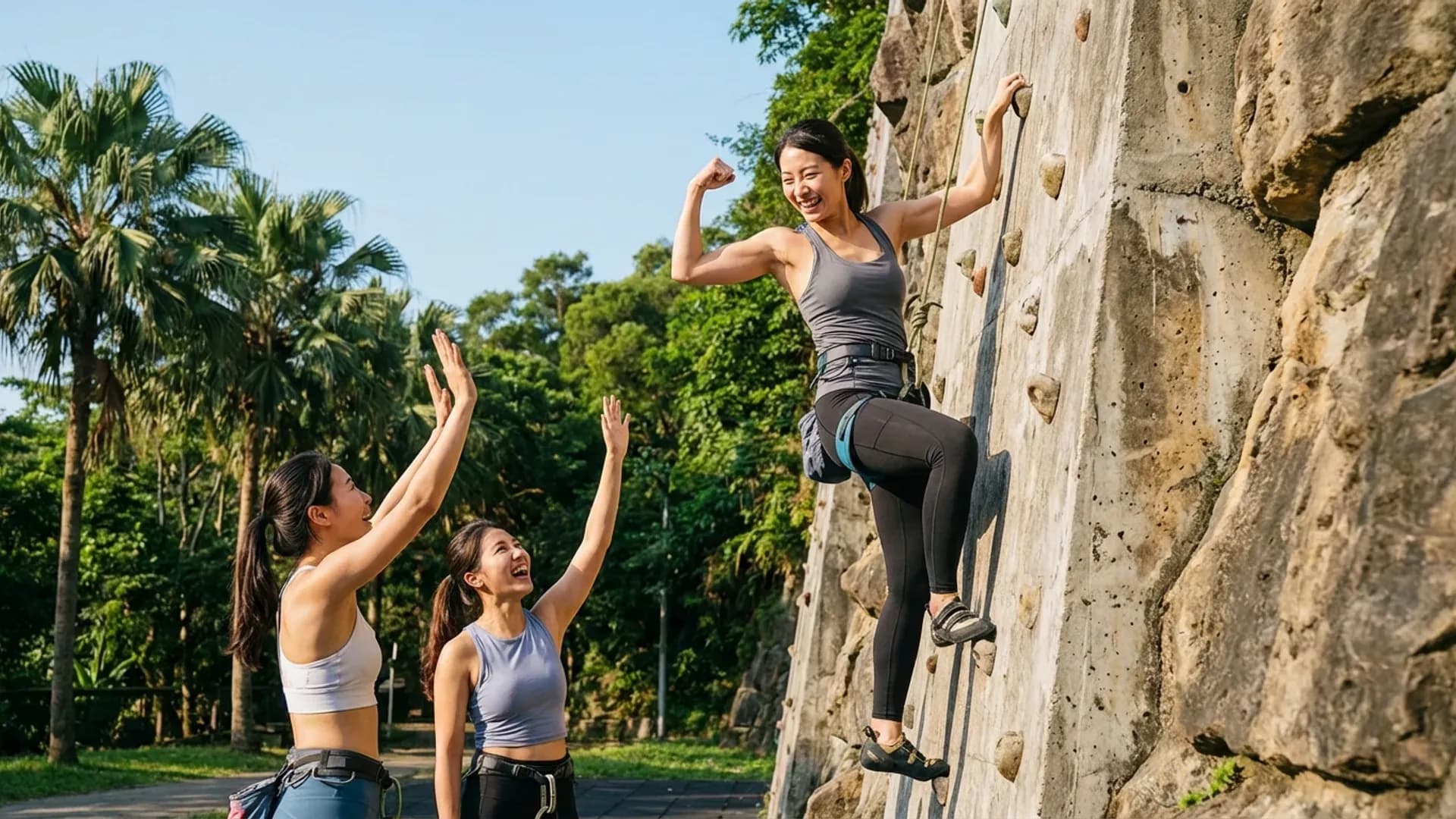
Women in Taiwan are increasingly rejecting traditional dinner-and-drinks dates in favor of outdoor, activity-based dating — and the shift is backed by both data and lived experience. A 2024 survey by the Matchmaking Industry Association of Taiwan found that 68% of women aged 25-34 now prefer activity-based first dates over sit-down meals or coffee meetups, up from 41% in 2021. The reasons go far beyond novelty. Women consistently cite three factors: feeling safer in public outdoor spaces, wanting to see a potential partner's real personality under low-stakes pressure, and rejecting the transactional dynamics of traditional dating culture where "who pays" becomes a proxy war for relationship expectations. This article explores why women — particularly in Taiwan but with lessons that resonate globally — are gravitating toward outdoor dating, what psychology and safety research reveal about this preference, and how platforms like GRASS are designed around these insights. If you're a woman tired of performative dinner dates, or someone who wants to understand this cultural shift, you're in the right place.
Why Are Women Moving Away from Traditional First Dates?
The backlash against conventional dating formats has been building for years, but it reached a tipping point in Taiwan around 2024-2025. A viral thread on Dcard — Taiwan's largest anonymous forum for young adults — captured the sentiment perfectly. A woman in her late twenties described going on twelve coffee-shop first dates in three months and feeling like she had attended twelve job interviews. "I can't tell if he's genuinely kind or just performing kindness for 90 minutes," she wrote. The post received over 8,000 upvotes and hundreds of comments from women sharing nearly identical frustrations.
The psychology behind this frustration is well-documented. Dr. Eli Finkel, a relationships researcher at Northwestern University, argues in his book The All-or-Nothing Marriage (2017) that sit-down dates create "interview mode," where both parties default to curated self-presentation rather than authentic interaction. People reveal their true character not through what they say about themselves, but through how they respond to unexpected situations — something a controlled restaurant environment almost never provides.
Women in Taiwan have identified several specific pain points with traditional dates:
- The payment dilemma: In Taiwanese dating culture, the question of who pays is loaded with expectations. A 2023 survey by DailyView found that 57% of Taiwanese women feel uncomfortable when a man insists on paying because it creates a sense of obligation, yet 34% also feel awkward suggesting to split. Outdoor activities naturally sidestep this dynamic — each person buys their own gear, entrance fee, or trail snack with no fanfare.
- Performance pressure: Restaurants and cafes are designed for face-to-face confrontation. Many women describe the pressure of maintaining eye contact and "being interesting" for two hours straight as exhausting. Activity-based dates let you focus on the shared experience rather than each other's faces.
- Limited personality signals: A man who is charming at dinner might be impatient on a hiking trail, dismissive of safety guidelines, or unable to handle mild discomfort. Outdoor settings reveal a far wider bandwidth of personality traits.
What Does Research Say About Safety and Outdoor Dating?
Safety is not a secondary concern for women choosing outdoor dates — it is often the primary driver. A 2023 Pew Research Center study found that 53% of women in the US who use dating apps say they feel unsafe meeting someone from an app for the first time, compared to 27% of men. While this data is US-specific, parallel research in East Asia shows similar or higher rates of concern. A 2024 National Police Agency of Taiwan report noted that dating-related fraud and safety complaints increased 22% year-over-year, with women filing 73% of those reports.
Outdoor, public-space dates address these concerns structurally:
- Natural witnesses: Parks, hiking trails, cycling paths, and outdoor recreation areas have continuous foot traffic. Unlike a private dinner at a quiet restaurant or, worse, an invitation to "come over and cook together," outdoor spaces ensure a woman is never truly alone with a stranger.
- Easy exit: On a trail or at a public park, leaving is as simple as walking away. There is no awkward signal to a waiter, no shared taxi dilemma, no social pressure to stay for dessert.
- Daylight advantage: Most outdoor activities happen during daylight hours, which multiple criminology studies (including Farrington & Welsh, 2002) have shown correlates with significantly reduced risk of interpersonal crime.
- Group settings: Outdoor activities lend themselves naturally to group participation. According to a 2024 survey by the Taiwan Institute of Economic Research, 37% of single women aged 20-35 prefer group dates over one-on-one first encounters, specifically because of safety and reduced pressure.
This is exactly why GRASS built its Group Adventure feature as a core part of the platform. Instead of matching two strangers and hoping for the best, Group Adventure lets users join multi-person outdoor activities — hiking meetups, cycling groups, kayaking trips — where the social pressure is diffused and the safety of numbers is built in. For women who have felt the vulnerability of one-on-one first meetings with strangers, this is not just a nice-to-have; it changes the entire calculus of whether to show up at all.
How Do Outdoor Dates Reveal Authentic Personality?
One of the most consistent findings in relationship psychology is that shared novel experiences accelerate genuine intimacy far more effectively than conversation alone. Dr. Arthur Aron's classic 1997 study at Stony Brook University demonstrated that couples who completed a challenging physical task together reported significantly higher feelings of closeness than those who simply engaged in pleasant conversation (Aron et al., Journal of Personality and Social Psychology, 1997). The mechanism is straightforward: novel situations require real-time problem-solving, cooperation, and emotional regulation — all of which are difficult to fake.
For women evaluating a potential partner, outdoor dates function as a low-stakes stress test. Consider the signals available during a simple day hike versus a dinner date:
- Patience and adaptability: Does he slow his pace when you need a break, or push ahead impatiently? Does he react calmly when the trail is muddier than expected?
- Respect for boundaries: Does he accept your decision to turn back if conditions change, or does he pressure you to continue?
- Practical competence: Can he read a trail map? Does he bring enough water? Small logistics reveal someone's capacity for thoughtfulness and planning.
- Emotional regulation: How does he handle minor setbacks — a wrong turn, a sudden rain shower, a closed trail? These micro-stressors surface emotional patterns that months of dinner dates might never reveal.
GRASS's Outdoor Passport feature taps into this insight by letting users showcase their actual outdoor activity history across 32+ sport types. Instead of a curated bio that says "I love hiking," the Outdoor Passport shows a verified record of activities — which trails someone has actually completed, which sports they genuinely participate in. For women screening potential matches, this provides a concrete signal of authenticity that a text-based profile simply cannot replicate.
Why Does Equality Matter So Much in Modern Taiwanese Women's Dating Choices?
Taiwan ranks first in Asia for gender equality according to the 2024 Gender Inequality Index methodology applied by the Executive Yuan's Gender Equality Committee, and the country legalized same-sex marriage in 2019 — the first in Asia. This cultural context matters because Taiwanese women, particularly those in urban centers like Taipei, Taichung, and Kaohsiung, increasingly expect dating dynamics to reflect the egalitarian values they experience in education and the workplace.
Traditional dating formats often reinforce outdated power dynamics. The man chooses the restaurant, makes the reservation, and pays — positioning the woman as a passive recipient of his choices and generosity. Many Taiwanese women on Dcard and PTT forums have described this dynamic as feeling like "being auditioned" rather than being an equal participant. A 2023 survey by the Taiwan Women's Foundation found that 62% of women aged 25-39 said they value "equal participation in planning" as one of the top three qualities they seek in early-stage dating.
Outdoor and activity-based dates naturally create a more egalitarian structure. Both people contribute physically. Both navigate the environment together. There is no "host" and "guest" — only two people sharing an experience. GRASS's Find Buddy feature embodies this philosophy: one person picks an activity, others respond based on genuine interest, and a match is formed around shared intention rather than one person's curated proposal. The result is a dating dynamic that feels collaborative from the very first interaction.
What Are the Best Outdoor Date Ideas for Women in Taiwan?
Taiwan's geography is uniquely suited to outdoor dating. The island offers mountains, coastline, hot springs, urban cycling infrastructure, and subtropical forests — all within short distances of major cities. Here are ten outdoor date ideas that Taiwanese women consistently recommend on social media and dating forums:
- Taipei's Elephant Mountain (Xiangshan) at golden hour — a 20-minute climb with stunning city views, short enough that it never feels like a commitment trap.
- Cycling the Tamsui River path — flat, safe, and ending at Tamsui Old Street for street food. The side-by-side riding naturally reduces face-to-face pressure.
- Jiufen Old Street to Jinguashi trail — cultural scenery plus a moderate hike. Great for testing conversational compatibility over 2-3 hours.
- Stand-up paddleboarding in Fulong — a beginner-friendly water activity that creates shared laughter and cooperation.
- Yangmingshan National Park hot spring trails — the foot-soak hot springs at the end make for a natural, relaxed reward.
- Night market food crawl + riverside walk — for those who want outdoor ambiance without athletic intensity. Dadaocheng Wharf in Taipei is a popular choice.
- Rock climbing at indoor-to-outdoor gyms — mutual belaying requires literal trust, making it one of the most revealing first-date activities.
- Surfing lessons at Wai'ao Beach in Yilan — shared beginner energy levels the playing field and removes any "expert vs. novice" power imbalance.
- Sun Moon Lake cycling loop — one of Taiwan's most scenic cycling routes, ideal for a full-day adventure once initial chemistry is established.
- Maokong Gondola + tea tasting — combines a scenic ride with a low-key tea-house experience, offering both outdoor and cozy elements.
Many of these activities can be organized through GRASS's Find Buddy or Group Adventure features, which handle the logistics of matching people by activity preference and schedule — removing one of the biggest barriers to actually making an outdoor date happen.
How GRASS Is Designed Around Women's Dating Priorities
Most dating apps were not built with women's specific safety and authenticity concerns in mind — they were built to maximize matches and engagement. GRASS takes a fundamentally different approach by centering the platform around outdoor activities rather than profile swiping. Here is how specific features address the concerns women raise most often:
- 3-layer safety system: GRASS uses AI-powered content review, human moderation, and suspicious behavior detection to flag problematic accounts before they can cause harm. Facial verification and real-name verification add additional trust layers that most dating apps do not offer.
- Group Adventure: Multi-person outdoor activities let women meet potential partners in a group setting first, removing the vulnerability of one-on-one stranger meetups. This directly addresses the Pew Research finding that over half of women feel unsafe meeting app matches alone.
- Find Buddy: A low-pressure 1-on-1 activity matching system where you choose the activity first and the person second. This inverts the traditional dating app model — you are not judging faces in a feed; you are finding someone who genuinely wants to do the same thing you do.
- Outdoor Passport: A verified history of outdoor activities across 32+ sport types. This provides women with a concrete way to assess whether someone's stated interests are real before ever meeting them.
- Hot Air Balloon (Random Chat): A no-match random chat feature that lets you have casual conversations without the pressure of a formal "match" — useful for warming up to someone before committing to an in-person activity.
The underlying philosophy is simple: the best filter for compatibility is shared experience, not mutual swiping. By making the activity the centerpiece of every interaction, GRASS creates a dating environment where women can evaluate partners based on behavior rather than bios — which is exactly what the research and the cultural shift both point toward.
Frequently Asked Questions
Is outdoor dating actually safer for women than traditional dating?
Research strongly supports it. Public outdoor spaces provide natural witnesses, easy exits, and daylight conditions that reduce interpersonal risk. A 2023 Pew Research Center study found that 53% of women feel unsafe meeting dating app matches alone. Group outdoor activities — like those facilitated by GRASS's Group Adventure feature — directly address this by ensuring women are never isolated with a stranger on a first meeting. Additionally, GRASS's 3-layer safety system (AI review, human moderation, facial and real-name verification) adds digital safeguards on top of the inherent physical safety of outdoor settings.
Why do women prefer activity-based dates over dinner dates?
Three main reasons emerge consistently in surveys and forum discussions. First, activity-based dates reveal authentic personality traits — patience, adaptability, respect for boundaries — that sit-down dates cannot surface (Aron et al., 1997). Second, they eliminate the transactional "who pays" dynamic that 57% of Taiwanese women say makes them uncomfortable (DailyView, 2023). Third, the shared focus on an activity reduces the "interview mode" pressure that makes traditional first dates feel performative rather than genuine.
Do I need to be athletic to try outdoor dating in Taiwan?
Not at all. Outdoor dating in Taiwan spans the full spectrum from gentle riverside walks and night market strolls to challenging mountain hikes and surfing. The key is choosing activities that match your comfort level. GRASS's Find Buddy feature lets you specify exactly which activity you are interested in — from casual cycling to rock climbing — so you are only matched with people at a compatible intensity level. Many of the most popular outdoor dates in Taiwan, like the Maokong Gondola ride or Tamsui riverside cycling, require no athletic ability whatsoever.
What makes GRASS different from other dating apps for women?
GRASS is fundamentally activity-first rather than appearance-first. Instead of swiping through photos, users connect through shared outdoor interests via features like Find Buddy (1-on-1 activity matching) and Group Adventure (multi-person outdoor events). The Outdoor Passport provides verified activity history across 32+ sport types, giving women a way to assess authenticity before meeting. The 3-layer safety system — including AI review, human moderation, and facial plus real-name verification — is specifically designed to address the safety concerns that disproportionately affect women on dating platforms.
Is this trend specific to Taiwan or is it happening globally?
The preference for activity-based dating is a global trend, but Taiwan is at the forefront due to its unique combination of factors: high smartphone penetration, world-class outdoor recreation infrastructure, strong gender equality norms, and a young population that is highly vocal about dissatisfaction with traditional dating formats on platforms like Dcard and PTT. Similar shifts are documented in South Korea, Japan, and urban centers across Southeast Asia. The underlying psychology — that shared experiences build deeper connections than curated conversations — is universal and supported by decades of relationship research.