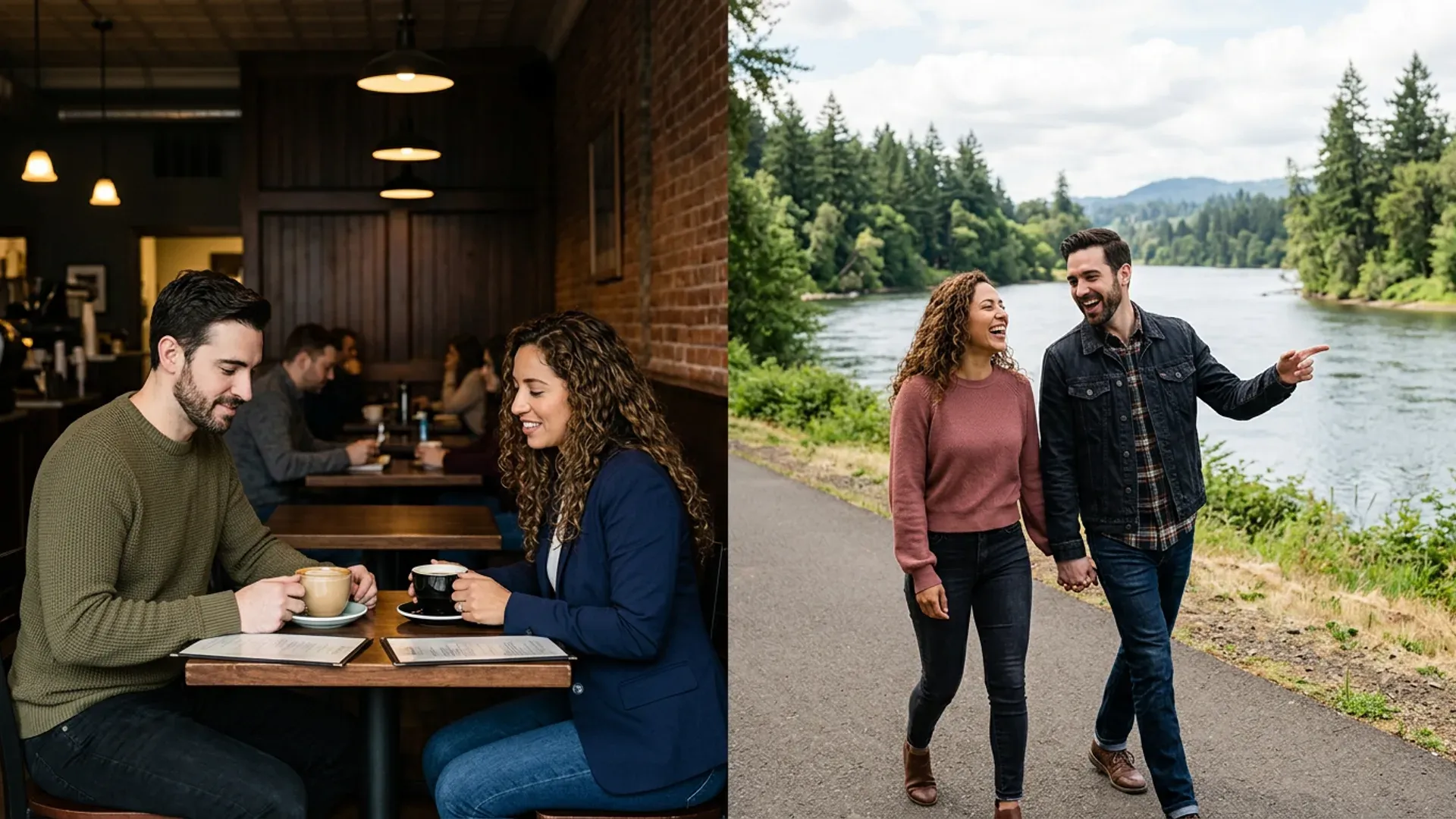
The coffee date has been the default first date for a generation. It's convenient, low-cost, and provides an easy exit. It's also, according to a growing body of research, significantly less effective at building connection than an outdoor date. The science is clear: where you meet someone shapes how you feel about them, and the outdoor environment has measurable advantages that a Starbucks booth simply can't replicate.
This isn't about being an outdoor enthusiast or an athlete. It's about understanding that the physical environment of a date directly influences your stress levels, your conversational dynamics, your body chemistry, and ultimately, whether you'll want to see that person again. The evidence consistently points in one direction.
The Science of Environment and Attraction
Environmental psychology has established that physical settings influence interpersonal perception in profound and predictable ways. The space you're in doesn't just provide a backdrop for a date — it actively shapes the date itself.
A landmark study published in Frontiers in Psychology found that just 20 minutes of nature exposure reduces cortisol (the primary stress hormone) by up to 21%. This is not a subtle effect. Cortisol directly impairs social cognition — the ability to read social cues, empathize, and communicate warmly. When your cortisol drops, you become measurably better at the exact skills that make a date go well.
Oxytocin, often called the "bonding hormone," increases during shared novel experiences. When two people navigate unfamiliar terrain together — literally or figuratively — their brains reward the cooperation with a neurochemical that builds trust and attachment. A walk through a park you both haven't explored triggers this mechanism. Sitting in a cafe you've been to a hundred times does not.
Then there's the misattribution of arousal effect, demonstrated in Dr. Arthur Aron's famous bridge study. When people experience physiological excitement — an elevated heart rate, quickened breathing — from an activity, they partially attribute that excitement to the person they're with. A hike with a moderate climb doesn't just get your heart rate up; it makes the person beside you more attractive. This is neuroscience, not opinion.
Coffee Dates: The Comfortable Default
Coffee dates became the standard first date for practical reasons that still hold: they're inexpensive ($5–10), they're time-flexible (you can leave after 20 minutes or stay for two hours), they're accessible (every neighborhood has a cafe), and they feel safe (public, low-commitment, daytime). These are real advantages, and for some situations, coffee remains a fine choice.
But the format has significant structural weaknesses that most people never consider.
The interrogation dynamic. Face-to-face seating across a small table creates a conversational setup that mirrors a job interview. You're positioned directly opposite each other with sustained eye contact as the social expectation. For many people — especially those who are introverted, anxious, or simply not great at performative small talk — this is the highest-pressure conversational format possible.
The conversation funnel. Without a shared activity to discuss, coffee date conversations almost inevitably follow a narrow script: what do you do, where are you from, do you have siblings, what do you like to do. These questions don't reveal who someone is; they reveal what someone says about themselves, which is a very different thing.
No shared experience. The most powerful predictor of interpersonal bonding is shared experience — doing something together. A coffee date provides no shared experience beyond consuming a beverage. There's nothing to refer back to, nothing to laugh about afterward, no story to tell. The date itself is forgettable by design.
Zero novelty. Cafes are familiar, routine environments. They don't trigger the neurochemical responses — oxytocin, dopamine, mild adrenaline — that create the "spark" people are looking for. The environment is working against you before you even open your mouth.
Data from matchmaking services suggests the average coffee date lasts about 45 minutes. That's enough time to exchange resumes. It's rarely enough time to create a connection.
Outdoor Dates: The Research-Backed Alternative
Outdoor dates outperform coffee dates on nearly every metric that predicts whether two people will want to see each other again. A 2025 report from Tawkify, one of the largest matchmaking services in the U.S., found that active first dates are 25% more likely to lead to a second date compared to sit-down meetings. The reasons are structural, chemical, and psychological.
Side-by-side dynamic. Walking, hiking, or cycling together places two people in a parallel orientation — shoulder to shoulder rather than face to face. This physical positioning fundamentally changes the conversational dynamic. There's less pressure to maintain eye contact, natural pauses feel comfortable rather than awkward, and the conversation flows more like talking with a friend than performing in an interview.
Nature provides conversation starters. A hawk circling overhead. An unexpectedly beautiful view around a bend. A fork in the trail. Outdoor environments generate organic conversational moments that reveal authentic reactions. You learn more about someone from how they respond to an unexpected river crossing than from how they answer "tell me about yourself."
Shared physical activity triggers bonding chemistry. The cortisol reduction from nature exposure, combined with the oxytocin release from shared novel experience, combined with the dopamine from physical movement, creates a neurochemical cocktail specifically designed to make humans feel connected. This isn't a dating hack — it's how human bonding evolved to work over hundreds of thousands of years.
Authentic personality emerges. You can't maintain a curated persona over a 90-minute hike. How someone navigates a tricky section of trail, whether they share their snacks, how they react to getting a little lost — these moments reveal character in ways that no amount of coffee shop conversation can match.
Built-in time limit. An out-and-back trail provides a natural endpoint. There's no awkward "so, should we get the check?" moment. The date ends when you return to the trailhead, and if it went well, you're both standing there already having planned the next one.
The Side-by-Side Advantage
The difference between side-by-side and face-to-face conversation deserves deeper examination, because it's one of the most underappreciated factors in dating dynamics.
Face-to-face conversation, as used in coffee dates and dinner dates, is evaluative by nature. You're positioned opposite someone, looking at them, being looked at. Every micro-expression is visible. Every pause feels loaded. The setup says: "I am assessing you, and you are assessing me." For people who are already nervous about a first date, this amplifies the anxiety to a level where authentic connection becomes nearly impossible.
Side-by-side conversation — the kind that happens naturally on a walk, a hike, a bike ride — is collaborative by nature. You're both facing the same direction. Eye contact happens in comfortable glances rather than sustained stares. The activity provides a shared focus, so the pressure of "keeping the conversation going" evaporates. You talk when it feels natural and you're comfortable with silence because you're both engaged in the same thing.
Therapists and relationship counselors have long noted this dynamic. Many report that their most productive sessions happen during walks rather than across a desk. Men in particular tend to communicate more openly in side-by-side settings — a finding that has implications for first-date dynamics. The hiking trail provides what the coffee table cannot: a space where vulnerability doesn't feel like exposure.
What the Data Says: A Side-by-Side Comparison
Here's how outdoor dates and coffee dates stack up across the dimensions that matter most for connection.
Stress level: Nature exposure reduces cortisol by up to 21% within 20 minutes. Cafe environments provide no measurable stress reduction. Advantage: outdoor.
Conversation quality: Side-by-side dynamics produce more natural, flowing conversation. Face-to-face settings tend toward interview-style exchanges. Advantage: outdoor.
Authenticity: Extended physical activity makes it difficult to maintain a persona. Seated, low-activity settings allow for more performance. Advantage: outdoor.
Bonding chemistry: Outdoor settings trigger oxytocin (shared novelty), reduce cortisol (nature), and increase dopamine (movement). Cafes trigger caffeine jitters. Advantage: outdoor.
Second date likelihood: Active dates show a 25% higher conversion rate. Advantage: outdoor.
Cost: Coffee dates cost $5–10. Park walks and public trails cost nothing. Advantage: outdoor.
Accessibility: Cafes are available everywhere and require zero fitness. Some outdoor activities require transportation and baseline fitness. Advantage: coffee — though urban parks eliminate most barriers.
How to Plan the Perfect Outdoor First Date
A successful outdoor first date doesn't require a backcountry expedition. The best options are accessible, moderately active, and provide enough time for conversation without feeling like a forced march.
Park walks (easiest): Every city has them. Central Park in New York, Zilker in Austin, Golden Gate Park in San Francisco, Piedmont Park in Atlanta. Zero cost, zero pressure, beautiful surroundings.
Urban hikes: Runyon Canyon in LA, Rock Creek Park in DC, Forest Park in Portland, Town Lake Trail in Austin. Moderate activity with conversation-friendly terrain.
Beach walks: Available on both coasts and the Gulf. The rhythm of walking along the water creates an almost meditative conversational pace.
Farmers market + park combo: Browse the market together (shared activity, natural conversation), then take your finds to a nearby park. This combines novelty with leisure.
Botanical gardens: Low physical intensity, visually rich, plenty of natural conversation starters. Most cities have them, and many are free or inexpensive.
Planning tips: Choose an activity at or below your date's fitness level — ask beforehand. Have a natural time boundary (a 2–3 mile loop is ideal). Pick an accessible location with parking or transit options. Bring water and a small snack to share. Check the weather and have an indoor backup — an indoor climbing gym, a museum, or a covered market all preserve the active-date advantage.
Apps like GRASS simplify the planning by matching people based on activity preferences and facilitating direct scheduling. You can propose a specific outing through Find Buddy or join a Group Adventure to meet someone in a low-pressure group setting.
The Bottom Line
The best date isn't the most expensive or the most elaborately planned. It's the one that lets both people be themselves. Science consistently and convincingly shows that outdoor settings achieve this better than indoor ones. The cortisol drops, the oxytocin rises, the conversation flows, and the performance mask comes off.
This doesn't mean every coffee date is doomed or every hike will lead to love. But if you're looking to maximize your chances of a genuine connection, the research points in one direction: outside. The trail, the park, the beach — these are the settings where humans have been connecting for thousands of years. They still work. Put down the latte and lace up.
Further Reading
>> Best Dating Apps 2026: 7 Apps Ranked
>> The Death of Third Places and the Rise of Outdoor Dating
>> Why Men Are Leaving Dating Apps
Frequently Asked Questions
Is an outdoor date a good first date?
Yes. Research from Tawkify's 2025 matchmaking report shows that active first dates are 25% more likely to lead to a second date compared to sit-down meetings like coffee dates. Outdoor dates reduce stress (cortisol drops up to 21% in nature), trigger bonding chemistry through shared novel experience, and create a side-by-side conversational dynamic that feels collaborative rather than evaluative. For people who struggle with the "interview" format of traditional first dates, outdoor settings provide a natural environment where authentic personality can emerge.
What are the best outdoor first date ideas?
The best outdoor first dates balance activity with conversation. Top options include: park walks (lowest barrier to entry — Central Park, Golden Gate Park, or any local greenspace), urban hikes (Runyon Canyon in LA, Rock Creek Park in DC), beach walks (available on most U.S. coastlines), farmers market visits paired with a park picnic, and botanical garden strolls. Choose activities at or below your date's comfort level, keep the distance to 2–3 miles, and bring water. Apps like GRASS can help you find someone who matches your activity preferences and schedule directly.
What if it rains on an outdoor date?
Always have a backup plan. Indoor climbing gyms preserve the active-date dynamic and the side-by-side advantage. Museums and aquariums provide the shared novel experience that triggers bonding chemistry. Covered markets and food halls offer the browsing-together element. Some people also choose to embrace light rain — a drizzly walk with good conversation can become a memorable shared experience. The key is flexibility: if you handle the change of plans with humor and ease, it actually demonstrates attractive qualities like adaptability and a good attitude.