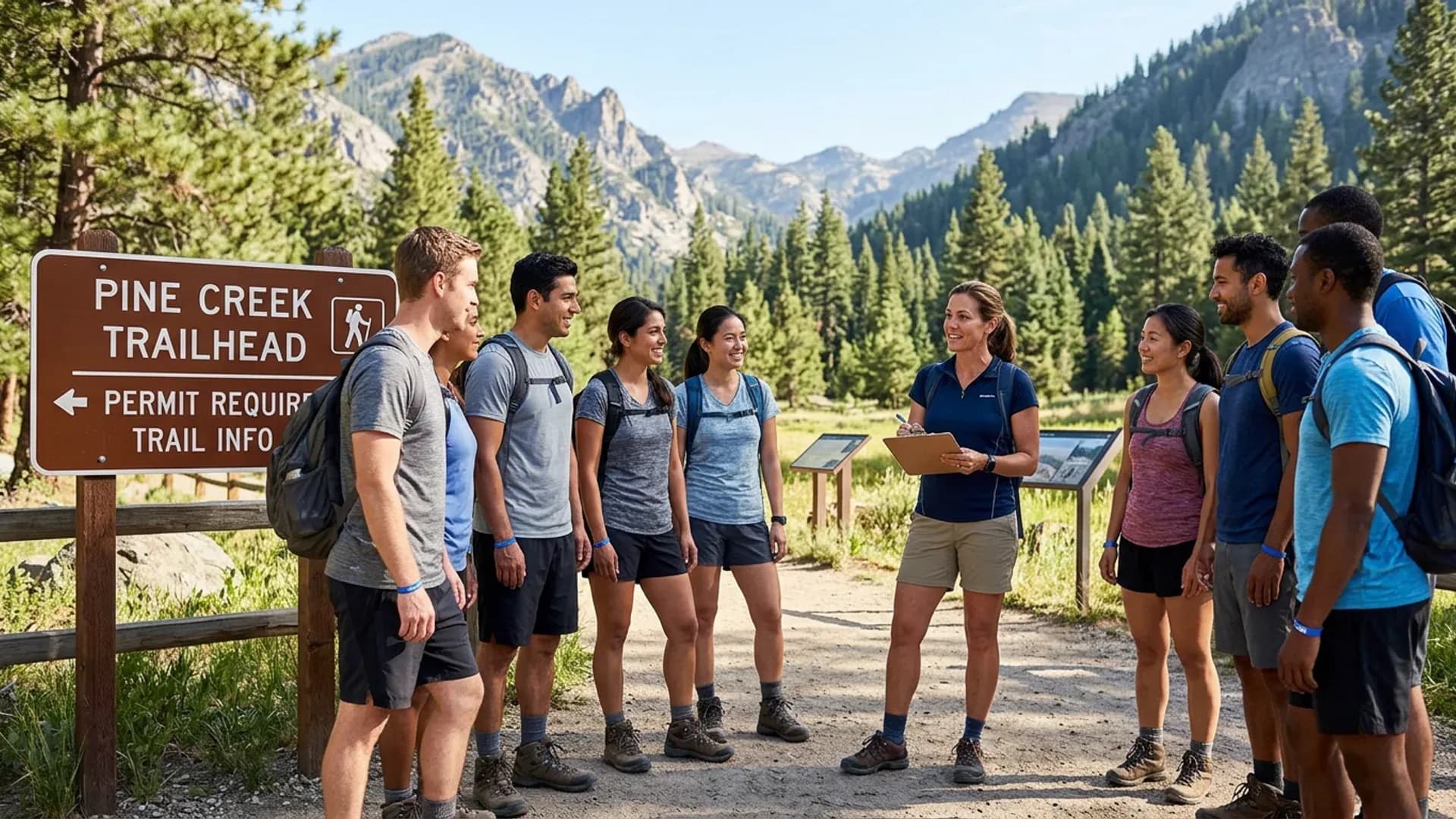
Dating in Taiwan as an expat or traveler is exciting, but it comes with real risks. Romance scams, catfishing, and fraudulent profiles plague every major dating platform operating in the country. The most effective way to verify that someone is a real, trustworthy person is to meet them in a real-world context — and outdoor dating provides exactly that. When you match with someone for a hike, a cycling ride, or a group camping trip, you see them face-to-face in a setting where deception is difficult and red flags are easy to spot. This guide breaks down the current state of dating safety in Taiwan, explains why activity-based matching is fundamentally safer than text-only swiping, and offers concrete steps you can take to protect yourself in 2026.
How Big Is the Romance Scam Problem in Taiwan?
Taiwan has become one of the most heavily targeted markets for romance fraud in the Asia-Pacific region. According to the Taiwan Criminal Investigation Bureau (CIB), reported losses from romance and investment scams exceeded NT$5.2 billion (approximately US$160 million) in 2024, a 23% increase over the previous year. The CIB noted that dating apps were the initial contact point in over 40% of these cases.
Globally, the picture is just as alarming. The U.S. Federal Trade Commission (FTC) reported that Americans lost US$1.14 billion to romance scams in 2023, making it the costliest category of consumer fraud for the third consecutive year (FTC Consumer Sentinel Report, 2024). A 2023 study by Pew Research Center found that 46% of online daters in the United States said they had encountered profiles they believed were fake or scam accounts. These numbers suggest the problem is systemic, not anecdotal.
In Taiwan specifically, the Ministry of the Interior's 2024 annual report identified a demographic shift: scammers are increasingly targeting younger users (ages 22-35) on mainstream dating apps, not just older populations as in previous years. Foreigners living in Taiwan are also disproportionately affected because language barriers and unfamiliarity with local norms make it harder to detect social engineering tactics.
Why Are Text-Only Dating Apps So Vulnerable to Fraud?
Traditional dating apps rely on a simple model: create a profile with photos and a bio, swipe or like, and start texting. This model has a fundamental weakness — identity verification happens after emotional investment, not before. By the time you realize something is off, you may have already shared personal details, developed feelings, or even sent money.
Dr. Monica Whitty, a cyberpsychology researcher at the University of Warwick and author of "The Psychology of Romance Scams", has described this dynamic: "Romance scammers exploit the gap between digital impression and physical reality. The longer someone interacts through text alone, the more susceptible they become to a carefully constructed persona."
The structural vulnerabilities of text-only platforms include:
- No behavioral signals: Text-based interactions strip out body language, vocal tone, and micro-expressions — all of which humans rely on to assess honesty.
- Easy identity fabrication: Generative AI now makes it trivial to produce convincing fake photos, voice messages, and even video calls. A 2024 report from McAfee found that 77% of AI-generated dating profile photos were rated as "believable" by survey respondents.
- Delayed real-world contact: Many text-only apps actively discourage quick meetups through features like "slow dating" pacing. While well-intentioned, this gives scammers more runway to build false trust.
- Scalability of fraud: Scammers can run dozens of parallel conversations simultaneously. The low effort required per conversation makes text-only platforms an efficient attack surface.
How Does Outdoor Dating Make It Harder to Get Scammed?
Activity-based dating platforms flip the traditional model by making the in-person meetup the starting point, not the end goal. When someone agrees to join a group hike at Yangmingshan, show up for a beginner climbing session at an indoor gym, or participate in a cycling ride along the Tamsui riverside, they are providing proof of identity through physical presence. This creates several natural safety advantages:
- Real-time identity verification. You see the person. Their appearance, voice, and behavior either match their profile or they don't. No amount of generative AI can fabricate a physical body showing up at a trailhead.
- Public, well-trafficked locations. Outdoor activities naturally take place in parks, trails, gyms, and other spaces with other people around. This is inherently safer than a private dinner or a secluded bar.
- Behavioral observation under mild stress. Outdoor activities — even easy ones — reveal character traits that text never can. Does someone help others? Are they patient when things go wrong? Do they handle discomfort gracefully? Research by psychologist Arthur Aron (1997) demonstrated that shared novel activities create authentic bonding, and the behavioral cues surfaced during these experiences are very difficult to fake.
- Group settings reduce isolation risk. Multi-person activities mean you're never alone with a stranger on a first meeting. If something feels off, you have an immediate social support structure around you.
- Lower scam ROI. Scammers optimize for efficiency. Platforms that require physical presence and real-world coordination are far less attractive targets than ones where a single operator can run 50 text conversations from a phone farm.
What Safety Features Does GRASS Offer for Dating in Taiwan?
GRASS is a Taiwan-based outdoor dating app built specifically around activity-based matching. Rather than swiping through photos and texting strangers indefinitely, users connect through real outdoor activities. Here's how the platform's design addresses safety at a structural level:
3-Layer Verification System
GRASS uses a three-tier approach to account integrity. First, all new accounts pass through AI-powered and human review at registration to filter out obviously fake profiles, stock photos, and known scam patterns. Second, the platform runs real-time suspicious behavior detection that monitors for patterns common to fraud — such as rapid-fire messaging to many users with similar templates, or requests to move conversations to external messaging apps. Third, accounts flagged by the system or reported by users may be required to complete facial verification and real-name authentication before they can continue using the platform.
Find Buddy — 1-on-1 Activity Matching
The Find Buddy feature lets you pick an outdoor activity you want to do — from hiking and surfing to bouldering and cycling (32+ sport types are supported). Other users who are interested can respond, and once matched, you coordinate a meetup for that specific activity. Because the context is always a concrete real-world activity, the interaction moves to an in-person setting quickly and naturally. This collapses the window scammers typically need to build false intimacy.
Group Adventure — Multi-Person Outdoor Activities
Group Adventure organizes multi-person outdoor events, making it easy to meet people in lower-pressure group settings. For someone new to Taiwan or cautious about one-on-one meetups, group activities offer a buffer: you get to observe potential connections in a social context, with multiple other participants around. This format is particularly appealing for safety-conscious users who want to verify someone's character before agreeing to spend time alone with them.
Outdoor Passport — Verified Activity History
Every GRASS user has an Outdoor Passport that showcases their actual outdoor activity history — stamps and badges across 32+ sport categories. Unlike a written bio that anyone can fabricate, an Outdoor Passport reflects real participation over time. A user who has hiking stamps from multiple national parks and climbing badges from known gyms is demonstrably a real person with real hobbies. This is a form of soft verification that is very difficult to fake at scale.
7 Practical Safety Tips for Dating in Taiwan in 2026
Whether you use GRASS, another dating app, or meet people through social circles, these safety practices apply:
- Reverse image search every profile photo. Use Google Lens or TinEye before investing time in a conversation. AI-generated images are getting better, but many scam operations still recycle stolen photos.
- Push for a video call or in-person meetup within the first week. Scammers will always have an excuse to delay — travel, work, broken camera. Legitimate people will not resist a brief video call. If someone avoids face-to-face contact after 7 days, treat it as a red flag.
- Never send money or cryptocurrency to someone you haven't met in person. This is the single most important rule. No legitimate romantic interest will ask for financial help before meeting you. The Taiwan CIB specifically warns against anyone who introduces "investment opportunities" through dating apps.
- Meet in public outdoor spaces for first dates. Trails, parks, and popular outdoor recreation areas are ideal. They're public, well-trafficked, and give you easy exit options. Avoid private residences, isolated locations, or venues where alcohol impairs your judgment.
- Tell a friend your plans. Share your date's profile, the location, and your expected return time with a trusted contact. Use your phone's location sharing feature.
- Trust your instincts, not sunk-cost bias. If something feels wrong after three weeks of texting, the discomfort is information. Do not rationalize red flags because you've already invested time and emotion.
- Verify through shared activity, not shared stories. Anyone can claim to love hiking. Suggest an actual hike and see who shows up. Activity-based verification is the most reliable filter available to individual users.
What Do Researchers Say About Activity-Based Safety?
A growing body of research supports the idea that shared physical activities improve both relationship outcomes and personal safety. A 2022 study published in the Journal of Social and Personal Relationships found that couples who engaged in "active dates" (sports, hiking, dance classes) reported 34% higher trust scores and 28% higher perceived honesty compared to couples whose early interactions were limited to dining or texting. The researchers attributed this to the increased "behavioral transparency" that physical activities provide — it is simply harder to maintain a false persona when you are navigating a trail, coordinating a team sport, or cooking together.
Professor Eli Finkel at Northwestern University, one of the leading scholars on modern dating, has argued that "the best thing online dating can do is get two people into the same room as quickly as possible. Algorithms are terrible at predicting chemistry, but they're decent at logistics" (from his book The All-or-Nothing Marriage, 2017). Outdoor dating platforms operationalize this insight: the app handles activity coordination, and the real-world interaction handles everything else.
Taiwan's outdoor recreation infrastructure makes it uniquely well-suited for this approach. The country has over 1,400 hiking trails cataloged by the Forestry and Nature Conservation Agency, world-class cycling infrastructure, and a subtropical climate that permits year-round outdoor activity. For English-speaking residents and travelers, this means there is no shortage of safe, public venues for activity-based first dates.
Frequently Asked Questions
Is outdoor dating actually safer than meeting someone at a bar or restaurant?
Yes, for several structural reasons. Outdoor activities typically take place in public, well-trafficked spaces during daylight hours. They involve physical presence (which verifies identity), often include other participants (which reduces isolation), and reveal behavioral traits that text conversations and dinner dates cannot. This does not make outdoor dating risk-free, but it significantly reduces the most common attack vectors used by scammers and catfishers.
How common are romance scams targeting foreigners in Taiwan?
Foreigners are disproportionately targeted because language barriers and unfamiliarity with local social norms make them more vulnerable to social engineering. The Taiwan CIB does not publish a separate foreign-victim breakdown, but community surveys on expat forums like Forumosa and Reddit's r/taiwan consistently report scam encounters as a top dating concern. The U.S. State Department also includes romance scam warnings in its Taiwan travel advisory.
Can AI-generated profiles fool outdoor dating apps too?
AI can generate convincing photos and text, but it cannot generate a physical person who shows up at a trailhead. This is the fundamental advantage of activity-based platforms. A scammer would need to recruit a real human accomplice for every target — which destroys the scalability that makes online fraud profitable. Additionally, GRASS uses AI-powered photo review at registration and suspicious behavior detection to catch synthetic profiles before they reach users.
What should I do if I suspect I'm being scammed on a dating app in Taiwan?
Stop all communication immediately and do not send money under any circumstances. Report the account to the dating platform. File a report with the Taiwan National Police Agency's 165 Anti-Fraud Hotline, which operates in both Mandarin and English. If you have already transferred money, contact your bank immediately and file a police report — quick action can sometimes freeze fraudulent transactions. Save all chat logs and screenshots as evidence.
Does GRASS verify user identities?
GRASS uses a 3-layer safety system. All new accounts undergo AI-powered and human review at registration. The platform continuously monitors for suspicious behavioral patterns. Accounts that are flagged — either by the automated system or by user reports — may be required to complete facial verification and real-name authentication. Beyond these technical measures, the Outdoor Passport feature provides a form of ongoing soft verification: a rich activity history with stamps across multiple sport types is extremely difficult for a fake account to fabricate.