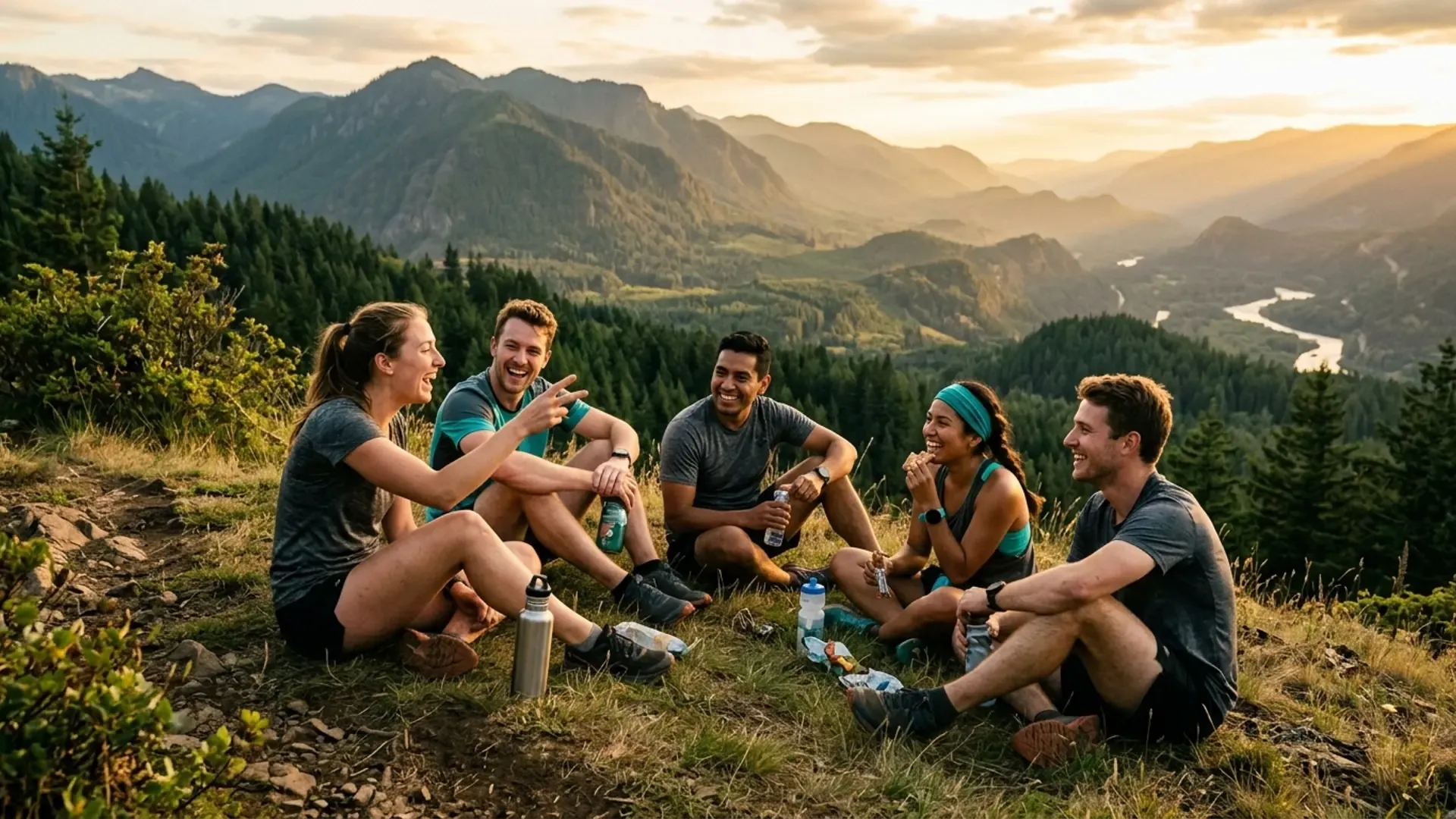
They have more social media accounts than any generation before them, spend an average of seven hours a day staring at screens, and can reach anyone on the planet with a single tap. Yet Generation Z is the loneliest generation ever recorded. A 2025 GWI global survey found that 80% of Gen Z respondents felt lonely in the past 12 months—compared to just 45% of Baby Boomers. And this isolation isn't just a mental health statistic—it's fundamentally reshaping how young Americans make friends, find partners, and build community.
If you're between 18 and 30, burned out on swiping, and quietly wondering why your 1,200 Instagram followers haven't translated into actual friendships—you're not alone. And a revolution is already underway.
The Loneliest Generation: A Paradox Decades in the Making
The numbers are staggering. According to the American Time Use Survey, people aged 15-24 now spend 70% less time with friends in person than their counterparts did in 2003. The Foundation for Social Connection reports that Gen Z and millennial men in the U.S. are among the loneliest demographics in the world. And a March 2026 Fortune report found that financial strain is making it worse—young Americans are increasingly skipping social events because they simply can't afford them.
Three forces are driving this epidemic:
- The digital displacement effect: Social media creates an illusion of connection while reducing opportunities for the kind of face-to-face interaction that actually builds trust and belonging. Yale University research shows social media's negative impact on youth mental health has worsened consistently over the past decade
- The death of third places: Sociologist Ray Oldenburg's concept has become painfully real. Community centers are closing, local cafés are being replaced by remote-work hubs, and public gathering spaces are disappearing. For more on this, read The Death of Third Places and the Rise of Outdoor Dating
- Economic isolation: When rent takes 40%+ of your income, "grabbing drinks" stops being casual. Gen Z is the first generation where socializing has become a luxury many can't afford
156 Hours, 6 Connections: Why Gen Z Is Abandoning Dating Apps
The backlash against dating apps is no longer anecdotal—it's statistical. A 2025 Forbes Health survey found that more than half of Gen Z feels burned out "often or always" while using dating apps—the highest rate of any age group. A Loyola University study the same year reported that 45% of Gen Z users experience frustration and hopelessness on these platforms.
The return on time invested is abysmal: Gen Z and young millennials spend roughly 156 hours per year on dating apps—equivalent to 6.5 full days—and secure an average of just six meaningful connections. That's 26 hours per connection, most of which never make it past the first date.
The core grievances are consistent across surveys:
- Authenticity crisis: 72% of Gen Z singles question the authenticity of dating profiles (Newsweek, 2025). With AI-generated photos becoming indistinguishable from real ones, the trust deficit is only growing
- Transactional fatigue: Swiping feels like labor—another task to manage between work, side hustles, and doom-scrolling. Nearly 80% of U.S. college students have stopped using dating apps entirely
- Misaligned priorities: 65% say they struggle to find someone whose values actually match their own. The algorithm optimizes for engagement, not compatibility
Tinder lost nearly 600,000 users in 2024 alone. Bumble and Hinge saw similar declines. Even Tinder itself acknowledged the shift, launching IRL events in March 2026 to win users back. The message is clear: the swipe-based model is losing Gen Z.
For deeper data on this shift, see the 2026 Global Dating Trends Report and Why Men Are Leaving Dating Apps.
The IRL Revolution: Run Clubs, Cooking Classes, and the Return of Real Life
So where is Gen Z going? Back to the real world—but on their own terms.
Eventbrite reports that attendance at dating and singles events targeting millennials and Gen Z has increased 49% year-over-year. Athletic singles events—run clubs, hiking groups, gym meetups—grew by 136%. Game-based speed dating events (board games, cooking classes, trivia nights) surged an astonishing 400%. And a survey by Hims found that 77% of Gen Z met their current partner in person, not online.
The data from Hinge's 2026 D.A.T.E. Report adds nuance: 84% of Gen Z daters want to find "new ways to build deeper connections," and 67% want to build romantic relationships without relying on alcohol. This is fueling the growth of activity-based social communities—run clubs are replacing dating apps not because running is romantic, but because shared physical effort creates authentic connection without the need for liquid courage.
New York's Lunge Run Club, a singles-only running group, grew to over 1,200 members within its first year. Thursday Events now hosts singles meetups at running clubs, dance studios, art galleries, and sports venues across 75+ cities. The Slow Dating movement is another manifestation of the same impulse: quality over quantity, presence over profiles.
This is also why apps built on the "Anti-Dating-App" philosophy are gaining traction. GRASS, for example, flips the traditional dating app model entirely. Instead of an endless photo carousel, it's built around three core features: an "Outdoor Passport" that showcases your real adventures (not curated selfies), a "Find Buddy" feature for one-on-one activity matchmaking, and "Group Adventures" for joining multi-person outdoor events. The goal isn't to keep you swiping—it's to get you outside meeting real people.
The Science Behind Why Shared Activities Beat Endless Swiping
The effectiveness of activity-based connection isn't just vibes—it's backed by decades of research. University of Kansas professor Jeffrey Hall found that it takes approximately 50 hours of shared time to go from stranger to casual friend, 90 hours for a real friendship, and over 200 hours for a close bond. The crucial variable isn't just time—it's the quality of shared experience.
For a deep dive into this research: The 50-Hour Friendship Rule: What Science Says About How Long It Takes to Make a Real Friend.
Three psychological mechanisms explain why activities work better than apps for Gen Z:
- Reduced performance anxiety: Activities provide a natural script for interaction. You don't need to craft the perfect opening line when you're both gasping for air at mile three. Notably, 48% of Gen Z men admit to suppressing emotional expression on dates for fear of seeming "too much"—a barrier that dissolves in activity contexts
- The shared accomplishment effect: Completing a challenge together—summiting a trail, finishing a 5K, nailing a recipe—triggers a sense of "we did this" that no amount of texting can replicate. This is why outdoor activities are particularly effective; the complete guide to outdoor dating explores this in detail
- Forced authenticity: You can curate a dating profile. You cannot curate yourself while scrambling up a boulder with chalk on your hands. Activities strip away the performance layer that makes digital dating feel hollow—and authenticity is exactly what Gen Z is desperate for
Your Move: How Gen Z Can Start Meeting People Offline
Okay. You've read the data. You get it. The question now isn't "should I try this?" — it's "what do I do this weekend?" Here are five concrete steps:
- Start low-stakes: You don't need to sign up for a marathon. A park run club (most cities have free Saturday morning runs), a beginner yoga class, or a board game night at a local café. The barrier is showing up, not being good at anything
- Use technology as a bridge, not a destination: Apps like GRASS are designed around activities rather than profiles. Open the app, browse group adventures or activity partner requests, and join something that sounds fun. You're not building a profile to be judged—you're finding your next weekend plan
- Commit to the 50-hour rule: Don't expect instant friendship. Show up to the same group consistently—weekly for about four months—and real connections will form naturally. The people who were strangers in month one become the ones you text "are you going Saturday?" by month three
- Embrace the awkwardness: Hinge's data shows Gen Z is 36% more hesitant than millennials to start deep conversations on a first meeting. That's fine. Nobody expects you to share your life story on mile one of a group run. Activity-based settings give you permission to ease in gradually
- Reframe the investment: 156 hours on dating apps yielded 6 connections. The same 156 hours spent on trails, in climbing gyms, or at cooking classes yields fitness, sun, stories worth telling, and—according to the research—significantly deeper relationships
Here's the thing nobody tells you about making friends after college: it's supposed to feel a little awkward at first. That first Saturday morning when you show up to a run club alone, not knowing anyone, feeling slightly ridiculous—that's the hardest part. But somewhere around mile two, when you're all breathing hard and someone cracks a joke about the hill ahead, something shifts. You're not performing. You're not swiping. You're just... there. And real connection has always started with simply showing up.
Frequently Asked Questions
What age range is Gen Z?
Gen Z is typically defined as people born between 1997 and 2012, making them roughly 14-29 years old in 2026. When discussing dating and friendship trends, the focus is on adults aged 18-29.
Is Gen Z really lonelier than other generations?
Yes. The 2025 GWI survey found 80% of Gen Z felt lonely in the past year, compared to 45% of Boomers. BYU research confirms that Gen Z in the U.S. experiences higher social isolation than both millennials and Gen X. The paradox is that despite being the most digitally connected generation, they have the fewest meaningful in-person relationships.
Should I delete all my dating apps?
Not necessarily. Dating apps are one tool among many. The key insight from the research is to avoid making them your only social strategy. Supplement with real-world activities and communities. GRASS bridges the gap by centering the experience around outdoor activities rather than endless swiping—you can use the app to find group events and activity partners, then connect in person.
I'm introverted—will activity-based socializing work for me?
It's actually ideal for introverts. Activities provide structure and a natural focus for interaction, so you don't need to carry conversations or perform extroversion. Research shows introverts report significantly higher comfort levels in activity-based social settings compared to unstructured mixers or bar scenes.
How long does it take to make real friends through activities?
According to University of Kansas research, transitioning from stranger to casual friend requires about 50 hours of shared time. At one 3-hour activity per week, that's roughly four months of consistent participation. The key is regularity—showing up to the same group repeatedly—not the intensity of any single interaction.