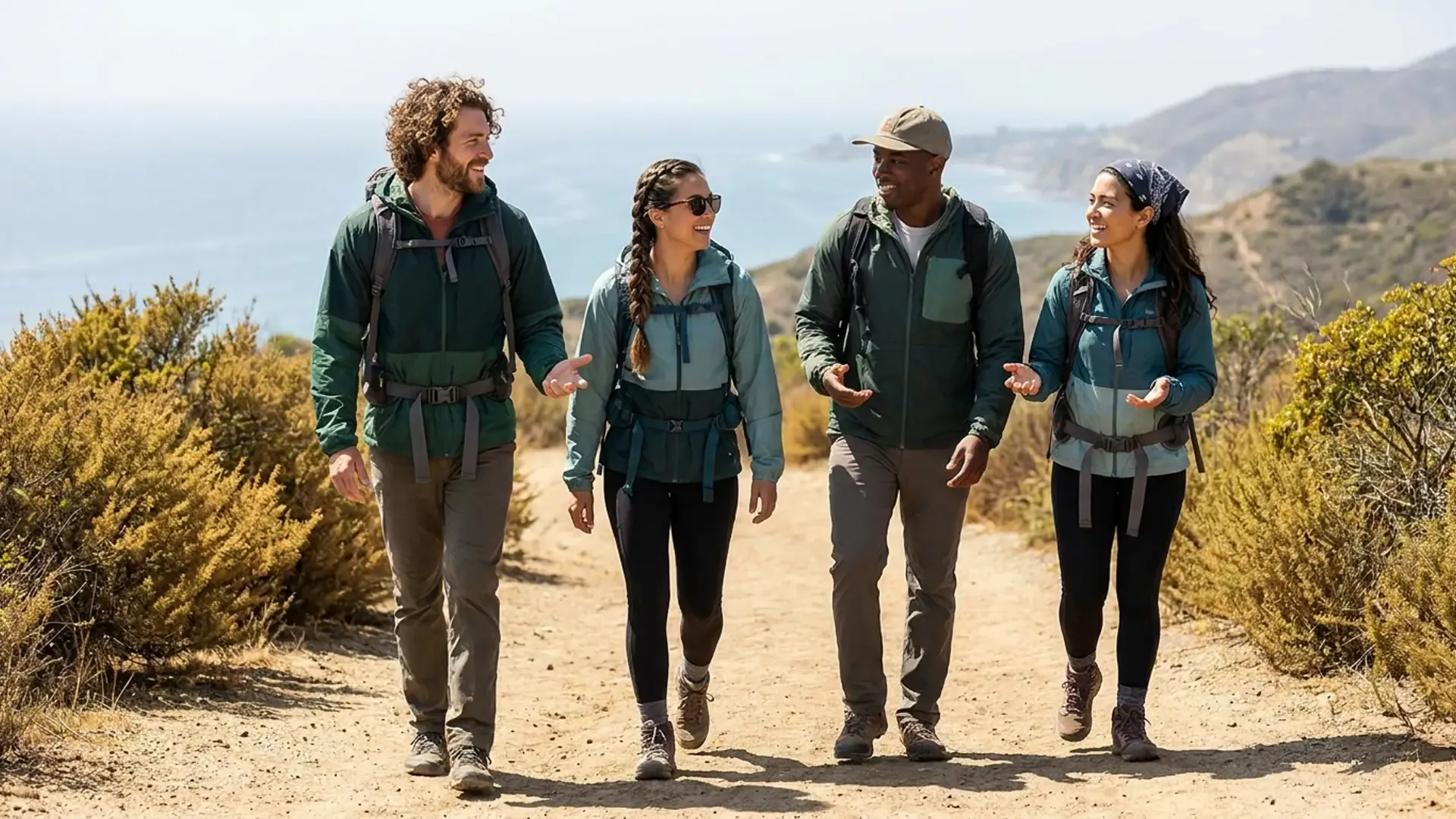
Online dating in the US has never been more popular — or more dangerous. According to FTC data, Americans lost $1.16 billion to romance scams in just the first nine months of 2025, with a median loss of $2,218 per victim. A Pew Research survey found that 46% of US adults view online dating platforms as "not too" or "not at all" safe as a way to meet people — with women significantly more wary than men (53% vs. 39%). The numbers are grim, but most of the risk is preventable — if you know what to look for.
Most safety guides scold or panic. This one does neither. We'll show you the five scams playing out on US apps right now, the red flags that surface in the first 72 hours, how Tinder, Bumble, Hinge, and GRASS actually compare on verification — and what to do the first time you meet someone in person, which is the part most guides skip.
How Risky Is Online Dating in the US Right Now?
Short answer: high enough that you should treat every new match as a stranger until proven otherwise. Here are the numbers that matter in 2026:
- $1.16 billion lost to romance scams in 9 months of 2025 (FTC). Median individual loss: $2,218 — the highest of any imposter-scam category.
- Romance/confidence fraud topped $1.3 billion in 2024 FBI complaints (IC3 Annual Report).
- 46% of US adults consider dating apps unsafe (Pew Research 2020). Women are 14 points more likely than men to say so.
- 1 in 4 daters have been targeted by a scam, per CatfishFinder 2026 dating app statistics. Romance scams and catfishing account for 37% of those incidents.
- Older victims engage longer with scammers — the FBI and AARP both report that 60+ victims, who lose the most money per incident, often stay in conversations for many months before realizing what's happening. Time is the scammer's most valuable asset.
The platforms are responding. Bumble launched Deception Detector in 2024 — in testing, the AI automatically blocked 95% of accounts identified as spam or scam and cut user reports of fakes by 45% in two months. Tinder followed with mandatory Face Check for new US accounts in October 2025. But scammers adapt faster than moderation teams. AI-generated photos, voice clones, and real-time deepfake video calls have made traditional "spot the bad profile" advice unreliable — we cover the deeper threat in our piece on AI deepfakes flooding dating apps. The short version: if you can't verify someone face-to-face in the real world, you can no longer fully verify them at all.
The 5 Dating App Scams You're Most Likely to Encounter
Most scams fall into one of five categories. Knowing the playbook is half the defense.
1. The Long-Con Romance Scam
The classic. A new match is unusually attentive, romantic, and patient. They tell you they love you within weeks. They have a vague but emotionally compelling reason they can't meet — deployed military, oil rig worker, doctor with a humanitarian NGO. Eventually, there's an emergency: a medical bill, a customs hold on a package, a wire that won't clear. They need just a few thousand dollars. They'll pay you back. They never do.
FTC tell: The story is always why they can't meet. The ask is always money.
2. AI Catfishing and Deepfake Video Calls
In 2026, the photo trick is dead. Scammers now use AI-generated faces (so reverse image search returns nothing) and real-time deepfake video filters that can pass a casual video call. The classic "ask them to video chat to prove they're real" is no longer a reliable test on its own.
Defense: Ask them to do something on camera that an AI filter struggles with — a specific hand gesture next to their face, turning their head sideways slowly, holding up a written word. If they refuse, the call is fake.
3. Pig Butchering / Crypto Investment Scams
A newer hybrid. The "match" doesn't ask for money — instead, they casually mention how well their crypto or stock investments are doing. Over weeks, they walk you to a slick-looking trading platform "their uncle works at." Early returns look fantastic. By the time you try to withdraw, it's gone. The FBI flagged this as the fastest-growing romance-adjacent scam in 2024, with billions in reported losses.
Rule: No one you met on a dating app is your investment advisor. Ever.
4. Sextortion
A match escalates quickly to intimate photos or video, then immediately threatens to send the material to your contacts, employer, or family unless you pay. The FBI reports thousands of sextortion cases involving young men each year, with several known suicides. Pay nothing and report it immediately.
Defense: Never send intimate content to anyone you haven't met repeatedly in person. If targeted, stop responding, screenshot everything, and report to the FBI at IC3.gov. Most platforms can take the material down quickly if you act fast.
5. Phishing and Off-Platform Pivot
A match wants to move the conversation off the app immediately — "Tinder's buggy, text me on WhatsApp." Once you're off-platform, the dating app has no record of the conversation, no ability to ban the scammer, and no liability. Phishing links, fake gift card "verification" pages, and Telegram crypto pitches all start this way.
Defense: Keep conversations on the app until you've actually met in person. If they push to move off-platform within hours of matching, that's the tell.
8 Red Flags Before You Ever Meet in Person
Most scams reveal themselves in the first 72 hours of conversation — if you're paying attention. Here's the checklist:
- Profile feels too perfect. Model-tier photos, dream job, lost a spouse, no social media presence to verify. Reverse image search every profile photo at Google Images or TinEye. AI faces won't hit, but stolen photos often will.
- Refuses to video chat — or only does it briefly with bad lighting. A 30-second blurry call is not verification.
- Story has a built-in reason they can't meet. Overseas military, oil rig, doctor on deployment, work travel "for the next few months."
- Escalates emotional intimacy too fast. "I love you" or "you're my soulmate" inside two weeks of matching is a pattern, not romance.
- Asks for money — any amount, any reason. Even $50. Especially gift cards, crypto, or wire transfers. The amount is a test. If you pay, the next ask gets bigger.
- Pushes to move off-platform fast. WhatsApp, Telegram, Signal within hours of matching = scammer infrastructure.
- Inconsistencies in their story. Says they live in Denver, but their timezone messages from Asia. Says they're 34, photos look 25. Trust your gut.
- "Investment opportunity" enters the conversation. Pig butchering scam, full stop. Block and report.
How Major Dating Apps' Safety Features Actually Compare
Every app claims to be "safe." What matters is what they actually require. Here's where the big four stand in 2026:
App | ID Verification | Selfie/Video Check | Additional Safety Tooling | Default Meeting Mode |
|---|---|---|---|---|
Tinder | Required for new US users (since Oct 2025) | Face Check video selfie mandatory | Garbo background check partnership (paid) | 1-on-1, off-app meetup |
Bumble | Optional government ID via Veriff (since Mar 2025) | Photo verification with specific pose | Deception Detector AI + filter for ID-verified profiles | 1-on-1, off-app meetup |
Hinge | Not required (mandatory rollout planned by end of 2026) | Selfie video verification | Profile-prompt moderation only | 1-on-1, off-app meetup |
GRASS | AI + human review on signup; face/ID re-check when flagged | Outdoor Passport centers on real activity photos, not selfies | Three-layer trust system: signup review, behavior monitoring, re-verification | Group activity or 1-on-1 outdoor — public by design |
Sources: Tinder Face Check (TechCrunch), Bumble × Veriff (TechCrunch), IDScan dating app verification comparison.
A few honest takeaways from this table:
- Tinder now has the strongest ID gate. New US users must pass Face Check before they can match. That doesn't prevent scams, but it raises the cost of running a fake account at scale.
- Bumble verification is opt-in. Most users skip it. You can filter to ID-verified only — and you should.
- Hinge is the laggard on hard verification today, though that changes by end of 2026.
- GRASS approaches safety structurally instead of just procedurally. The product is built around group outdoor activities — meaning the default first meeting is in a public place, with multiple people, doing something active. That eliminates the entire "alone with a stranger in a private setting" risk class without relying on the user to remember to apply rules.
If you want a deeper look at how the activity-first model changes the safety equation, see our breakdowns of GRASS vs Tinder and GRASS vs Bumble.
Your IRL Meet-Up Safety Playbook
Verification only gets you to the door. What matters most is what you do the first time you meet in person. The risk profile here is gendered — women face more physical-safety risk on first meetings, while men are disproportionately targeted in sextortion — so the rules below skew toward female-safety norms because they're the higher-stakes case. Here's the playbook every dating safety expert — from RAINN to the FTC's Online Dating page — converges on:
- Tell a friend the full plan. Name of the person, their phone number, your match's profile screenshots, where you're going, when you'll check in. Set a hard "if I haven't messaged by X, call me" time.
- Public place, daytime, your own transportation. No "I'll pick you up." No going back to anyone's place on a first date. Drive yourself or take a rideshare you control.
- Tell the venue, quietly, that it's a first meeting. Many bars, cafes, and even some restaurants now train staff for an "Angel Shot" or equivalent code if you need a discreet exit.
- Don't share home address, workplace, or income markers early. A great date doesn't need to know your apartment number. A scammer does.
- Trust the gut, leave when something feels off. You don't owe a stranger politeness over your safety. "I'm not feeling great, I'm going to head out" is a complete sentence.
- Drinks: count, watch, lid. Order yourself. Watch it being made. Cover the top if you step away. Drink spiking is rare but still happens.
Why "Outdoor + Group + In-Person" Is the Safest Way to Date in 2026
Here's the part most safety guides won't say out loud: every safety rule above is downstream of one assumption — that dating means meeting a stranger alone, in private, after weeks of texting. Change the assumption, and most of the risk surface goes away with it.
A first meeting at a group hike, a Saturday morning run club, a beginner climbing session, or a community pickleball ladder has structural safety properties no verification badge can match:
- Public location by design. Trailheads, parks, gyms, and run starts are always in the open with other people around.
- Group context. You're meeting in a 6–20 person setting, not alone. Bad actors don't pick group environments.
- Activity does the talking. You're not stuck across a table for two hours trying to "read" a stranger's intentions. You're hiking, running, climbing — and you learn far more about who they actually are than any video call could show.
- Built-in exit. If something's off, you finish the activity with the group and go home. There's no awkward "should I stay for another drink" pressure.
Research on group activities backs this up. In our piece on the psychology of group bonding, we walk through the mechanism: shared physical effort in a small group produces faster, more accurate read-outs of someone's real personality than weeks of text ever can. You're not just safer — you're also making better calls about who's worth a second meeting.
This is especially relevant if you're searching for women-only walking groups or female-led hiking meetups with safety features and verified profiles. The structural argument applies even more strongly there: a women-only group activity removes both the gendered solo-meeting risk and the verification problem in one move, because everyone in the group has signed up through the same platform and shown up to the same physical place.
This is why we built GRASS the way we did. GRASS is an outdoor-first dating and friend-making app where the default first meeting is a group activity — a hike, a run, a climb, a paddle, a pickup game. Verification matters, and we have a three-layer review system that combines AI plus human checks at signup, behavior monitoring during use, and selfie + ID re-verification when an account is flagged. But the bigger safety story is structural: the product is designed so that "meet a stranger alone in private" simply isn't the default path.
If you want the full walkthrough of how GRASS works in practice, see our step-by-step US guide to using GRASS. And if you want a side-by-side look at where GRASS sits next to the major apps, our 2026 best dating apps ranking is the place to start.
FAQ: Dating App Safety in 2026
What is the safest dating app in the US in 2026?
There's no single "safest" app — safety depends on the mode of meeting, not just the platform. Tinder has the strongest mandatory ID verification for new US users as of late 2025. Bumble offers strong opt-in ID verification through Veriff. Hinge is rolling out mandatory verification by the end of 2026. GRASS takes a structural approach: the product defaults to group outdoor activities, which removes the highest-risk meeting scenario (alone with a stranger in private) from the start. The safest approach is to pick an app whose verification you trust and to default to public, group, or activity-based first meetings.
How much do Americans lose to dating app scams each year?
The FTC tracked $1.16 billion in romance scam losses in just the first nine months of 2025, with a median individual loss of $2,218. The FBI's Internet Crime Complaint Center recorded $1.3+ billion in romance/confidence fraud losses for 2024. Most experts believe actual losses are 5–10x reported numbers, since most victims never file a complaint.
Is video chatting before meeting still a reliable safety check?
Less than it used to be. AI-generated avatars and real-time deepfake video filters have made short, low-quality video calls easy to fake. Treat video chat as one signal among many: ask for an unscripted gesture (turn head sideways slowly, hold up a written word next to your face, wave with a specific hand pose). Real people do these things instantly; deepfake filters glitch or refuse.
What should I do if I think I'm being scammed?
Stop sending money or personal information immediately. Screenshot everything. Report to the FTC at reportfraud.ftc.gov and the FBI at IC3.gov. Report the profile to the dating app. If you've sent money via wire, call your bank within hours — some transfers can still be reversed. Don't feel embarrassed: romance scammers are professional manipulators, and falling for one says nothing about your intelligence.
Are dating app background checks worth paying for?
Mixed. Tinder partners with Garbo, and several third-party services offer paid background checks. They can flag prior arrests, restraining orders, and registered offender status — which is useful. They won't catch a first-time scammer, a catfish using a stolen identity, or someone using a fake name. Treat a clean background check as one input, not a green light. Verification of who you're meeting still matters more than a paid report.
Why does meeting outdoors in a group reduce dating risk?
Public visibility, group witnesses, a shared activity that fills the time, and an automatic exit when the activity ends — all four factors are present in a group hike, run club, or climbing session, and none of them rely on you remembering to apply a safety rule under social pressure. That's why platforms built around group outdoor meetings (like GRASS) shift the safety question from "did this user follow the rules?" to "is the default behavior of the platform safe?" The second one is a lot harder to mess up.
Date Safer in 2026: Move the First Meeting Outside
The honest summary: dating app safety in 2026 is a real, measurable risk — $1.16 billion of measurable. But most of that risk lives in one specific scenario: long online conversations with an unverified stranger that eventually move to a private first meeting. Disrupt that scenario, and you disrupt most of the danger.
That's the bet GRASS is built on. Real activities, in public, often in groups, with verification baked in from signup. If you're ready to try a different default, download GRASS and join a group hike, run, or paddle as your first meeting. It's the safest first date you'll ever have. The fun is a side effect.