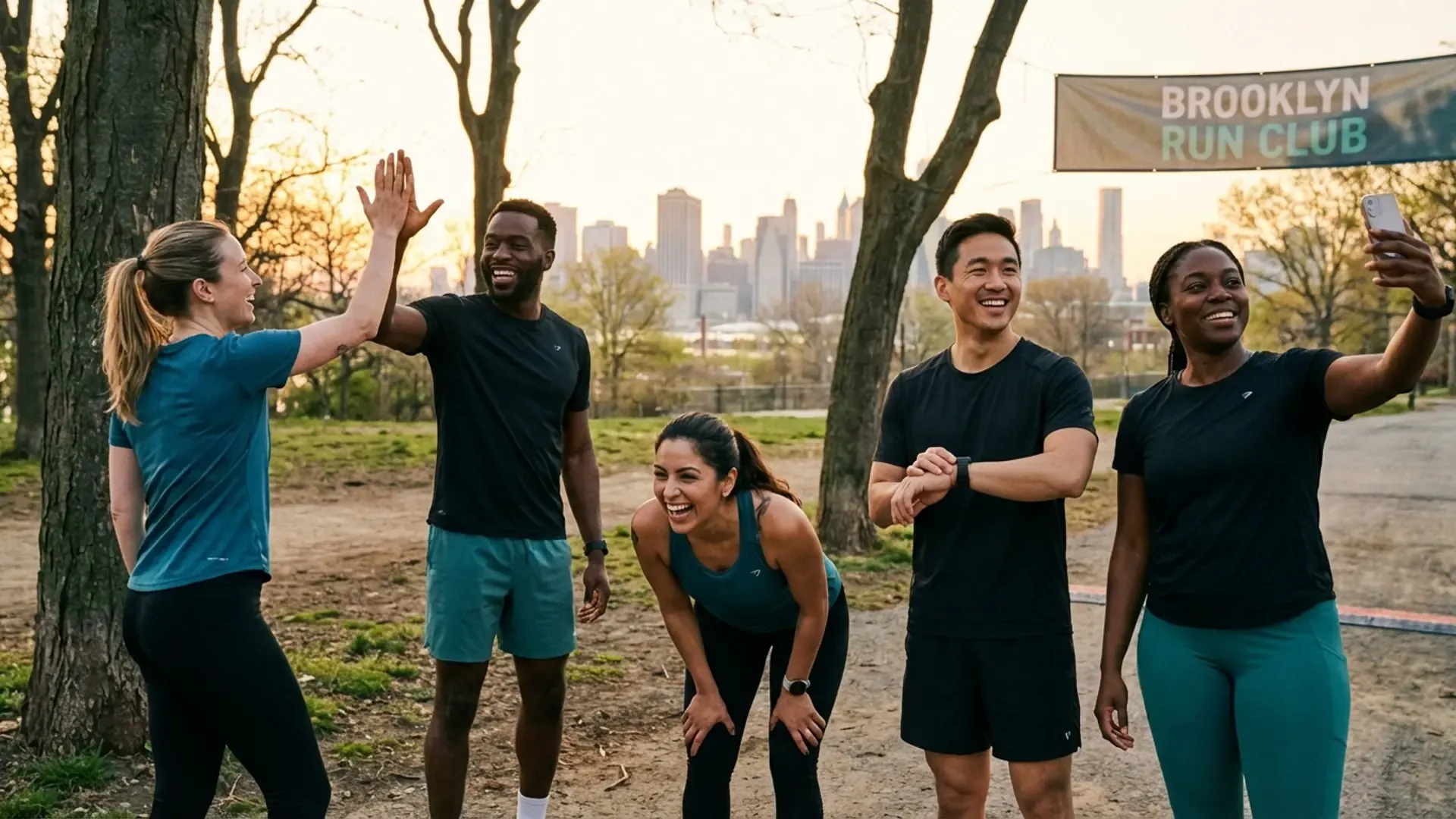
If swiping feels more like a chore than an adventure, you're not alone. The 5 biggest dating trends of 2026 are: (1) The anti-swipe movement going mainstream—Bumble's annual report shows a clear majority of users now prefer "fewer but higher-quality" matches; (2) AI disrupting dating through deepfakes, chatbot scams, and AI-assisted prompts; (3) Slow dating becoming the norm, with major platforms launching features that limit daily matches; (4) Activity-based socializing replacing traditional swiping—running clubs, climbing gyms, and group hikes becoming the new "dating venues"; (5) Gen Z (ages 18-29) rewriting the dating playbook with a focus on shared interests over appearance and group activities over one-on-one dates.
This report draws on data from Tinder's Year in Swipe, Bumble's Dating Trends Report, Hinge Labs research, and Pew Research Center surveys (2023) to map the structural shifts reshaping how Americans meet romantic partners in 2026.
Why Are People Quitting the Swipe? The Anti-Swipe Movement Explained
The anti-swipe movement is the collective shift away from high-volume swiping toward more intentional, quality-focused dating behavior. According to Pew Research (2023), 46% of dating app users already described their experience as "frustrating." By 2026, this sentiment has only intensified. Match Group (Tinder's parent company) has reported multiple quarters of declining paid subscribers, with leadership acknowledging that "users are seeking deeper, more intentional connections."
The numbers tell a clear story. Bumble's annual Dating Trends Report found that a clear majority of users now prefer "fewer but better" matches over high-volume swiping. Hinge reported that profiles with detailed prompts receive significantly more meaningful conversations than those with just photos. The era of "swipe right on everyone and see what sticks" is dying—and the platforms know it.
In the U.S., this shift is particularly visible among urban professionals aged 28-40. A 2025 survey by the dating consultancy firm Three Day Rule found that 68% of clients cited "app fatigue" as their primary reason for seeking alternative ways to meet people. The anti-swipe movement isn't about rejecting technology—it's about demanding that technology serve human connection rather than engagement metrics.
This is why more people are exploring ways to meet that don't revolve around swiping—using real activities to replace algorithmic matching.
Related: The Science-Backed Cure for Dating App Fatigue | 5 Signs You're Experiencing App Fatigue
How Is AI Changing Dating in 2026?
AI's impact on dating in 2026 goes far beyond photo filters. Cybersecurity firm Sensity AI has documented an explosive increase in deepfake images on dating platforms over the past two years. AI chatbots can now sustain convincing conversations for weeks, mimicking genuine emotional connection until the scam is revealed. The FBI's Internet Crime Complaint Center (IC3) reported that romance scam losses in the U.S. exceeded $1 billion in recent years—and AI is making these scams significantly harder to detect.
But AI also has a constructive side in dating. Hinge's AI-assisted prompt suggestions help users craft better opening messages, resulting in meaningfully higher response rates according to Hinge Labs. Bumble has deployed AI photo verification to detect manipulated images. And several startups are using AI to match people based on conversation patterns rather than static profiles.
The fundamental tension is clear: as AI makes it easier to fabricate identity online, meeting in person becomes the ultimate authentication. This dynamic is accelerating the shift toward activity-based dating where you see the real person first, not a curated digital version.
What Is Slow Dating and Why Is It Taking Over?
Slow dating is the practice of intentionally reducing the number of people you're talking to at once, focusing on depth over breadth. It has become one of the most searched dating terms of 2025-2026, with Google Trends showing significant growth in searches for "slow dating". The concept is straightforward: instead of chatting with 10 people simultaneously, focus deeply on 1-2 connections at a time.
Hinge has been the most aggressive champion of slow dating, encouraging users to focus on one match at a time rather than browsing endless profiles. According to Hinge Labs, users who adopt this deep-engagement approach are significantly more likely to enter committed relationships compared to traditional high-volume users. Bumble followed with features that cap daily matches, reporting an increase in meaningful conversations as a result.
The psychology behind slow dating's effectiveness is well-established. Psychologist Barry Schwartz's "paradox of choice" research demonstrates that more options lead to worse decisions and lower satisfaction. When you're simultaneously chatting with 5 people, each gets only 20% of your attention—barely enough for surface-level interaction, let alone genuine connection. By constraining options, slow dating forces depth.
In practice, Americans are embracing slow dating both on and off apps. The rise of "intention cards" on Hinge profiles—where users state they're "looking for something real" rather than "seeing what happens"—reflects a broader cultural shift toward deliberate, purposeful dating. For a deeper look at how psychology shapes connection, see: The Psychology of Making Friends: 7 Science-Backed Secrets
Curious what dating without swiping actually looks like? Check out the complete guide to activity-based dating, or browse what outdoor activities are happening near you on GRASS this weekend.
Why Are Running Clubs and Hiking Groups Replacing Dating Apps?
Activity-based socializing means meeting people through shared experiences rather than traditional swipe-match-chat-meet sequences. If the early 2020s were defined by video dates, 2025-2026 is the era of activity-based socializing. This isn't just a niche trend—the data shows a structural shift in how Americans meet.
Picture this: a Saturday morning at a Brooklyn running club, where two strangers who just finished a 5K walk together to the nearest coffee shop, still catching their breath. This scene is playing out across America. Running club membership in the U.S. has roughly tripled since 2023 (parkrun global data), with 18-35-year-olds comprising over 50% of participants for the first time. Eventbrite reports substantial year-over-year growth in "social outdoor activity" events. And REI's community programs have seen a notable surge in solo signups—people going alone specifically to meet others.
Why is activity-based socializing overtaking traditional dating? Three evidence-backed reasons:
- Reduced social pressure—The activity is the primary purpose; meeting people is a natural byproduct. There's no "must match" pressure that characterizes dating apps
- Authentic self-presentation—After 3 hours on a trail together, you've seen the real person, not a curated profile. Research by Arthur Aron (1997) shows shared challenging experiences accelerate trust-building significantly
- The "Third Place" replacement effect—As sociologist Ray Oldenburg's "third places" (cafes, community centers, public spaces) continue to disappear, running clubs and hiking groups are filling the social vacuum
Platforms like GRASS are built entirely around this model—using technology to organize outdoor activities where real connections happen face-to-face, not through algorithms.
For a comprehensive guide: The Complete Guide to Outdoor Dating: Replace Swiping with Real Adventures
How Is Gen Z Dating Differently From Millennials?
Gen Z (born 1997-2012, the 18-29 adult cohort in 2026) isn't just "younger millennials"—they have fundamentally different expectations and behaviors when it comes to dating.
Tinder's Year in Swipe annual report reveals distinctive Gen Z patterns:
- A majority say shared interests matter more than physical appearance—a stark contrast from millennial priorities
- Most check a match's social media before meeting—using Instagram/TikTok as a "realness" verification tool
- Strong preference for group activities over one-on-one dates
- "Situationships" are normalized—Gen Z is comfortable with undefined relationships, rejecting the "DTR" (Define The Relationship) pressure
Perhaps most significant is Gen Z's distrust of algorithms. A Morning Consult survey found that a majority of Gen Z users believe dating app algorithms "don't understand what they actually want". They're not looking for better algorithms—they're looking for ways to meet people that don't require algorithms at all. This generation also demands inclusivity—diverse representation in who they match with and how platforms design their experiences.
This paradox—a generation raised on social media that craves offline authenticity—is driving Gen Z toward IRL (in real life) social experiences. Running clubs, climbing gyms, volunteer groups, and outdoor adventure meetups are seeing massive Gen Z adoption. The implication for dating platforms is clear: the future isn't about building better matching algorithms—it's about facilitating real-world encounters.
What These Trends Mean for the Future of Connection
Synthesizing these five trends, three key insights emerge for anyone navigating the American dating landscape in 2026:
1. Quality over quantity is no longer optional—it's expected
Whether it's Hinge's "One at a Time," Bumble's "Slow Mode," or the rise of activity-based meetups, the market is structurally shifting away from high-volume swiping. Users who still treat dating apps like a numbers game will find diminishing returns.
2. Authenticity is the new currency
In a world where AI can fake photos, conversations, and even video calls, being genuinely yourself—in person—is the ultimate differentiator. Platforms and individuals who prioritize real interactions will win. This is why men are leaving traditional dating apps in favor of experiences that showcase who they actually are.
3. The "how you meet" matters as much as "who you meet"
Research consistently shows that the context of your first meeting shapes the trajectory of the relationship. Meeting through a shared activity creates a foundation of common experience and authentic interaction that a text-based match simply cannot replicate. For the science behind this, see: Outdoor Dating vs. Coffee Dates: What the Science Says
From Trends to Action: Finding Your Own Path
These trends aren't just abstract data points—they're real forces shaping your dating experience right now. If you're feeling dating app fatigue, or if the idea of another awkward coffee date fills you with dread, consider making the shift from swiping to doing. One real outdoor adventure can create more genuine connection than a hundred meaningless matches.
Stop swiping. Start doing. Find your next outdoor adventure on GRASS and meet real people doing real things this weekend. No algorithms deciding your fate, no AI-polished profiles to decode—just genuine connection through shared experience. The future of dating isn't about swiping better. It's about showing up.
Frequently Asked Questions
Q1: What are the biggest dating trends in 2026?
The five biggest dating trends in 2026 are: (1) The anti-swipe movement—Bumble reports most users now prefer fewer, higher-quality matches; (2) AI disruption through deepfakes and chatbot scams, alongside constructive AI features; (3) Slow dating's rise, with Hinge Labs data showing deep-engagement users are significantly more likely to find relationships; (4) Activity-based socializing replacing traditional swiping; (5) Gen Z prioritizing shared interests and group activities over appearance-based matching.
Q2: What is slow dating and does it actually work?
Slow dating means intentionally reducing the number of people you're talking to at once, focusing deeply on 1-2 connections rather than juggling multiple conversations. It works because psychologist Barry Schwartz's "paradox of choice" research proves that more options lead to worse decisions and lower satisfaction. Hinge Labs data shows that users who focus on fewer matches at a time enter committed relationships at significantly higher rates than traditional users.
Q3: How is AI affecting dating apps in 2026?
AI has a dual impact: negatively, deepfake photos have surged (Sensity AI) and AI chatbot scams are harder to detect (FBI reports over $1 billion in romance scam losses in recent years); positively, AI-assisted prompts meaningfully boost response rates (Hinge Labs) and AI photo verification helps detect manipulated images (Bumble). The net effect is accelerating the shift toward in-person meetings as the ultimate form of identity verification.
Q4: How does Gen Z date differently from millennials?
Key differences: Gen Z overwhelmingly values shared interests over appearance (a stark contrast from millennial priorities); they prefer group activities over one-on-one dates; they distrust dating algorithms (Morning Consult survey); and they've normalized "situationships" (undefined relationships). Gen Z is driving adoption of activity-based dating platforms and running club meetups, and they demand greater inclusivity in dating experiences.
Q5: What is activity-based socializing?
Activity-based socializing means meeting people through shared experiences (running clubs, hiking groups, climbing gyms, camping trips) rather than traditional swipe-match-chat-meet sequences. Benefits include reduced social pressure, authentic self-presentation, and accelerated trust-building through shared challenges (Aron et al., 1997). Running club participation has tripled since 2023 (parkrun data).
Q6: Are dating apps still worth using in 2026?
Dating apps remain a valid way to meet people, but usage strategy matters more than ever. 2026 recommendations: (1) Practice slow dating—limit active conversations to 1-2; (2) Choose platforms that encourage real interaction (Hinge, GRASS) over pure swiping; (3) Use apps as "discovery channels" and move to in-person meetings quickly. See: 2026 Best Dating Apps Ranking
Q7: Why are running clubs becoming the new dating scene?
Running clubs combine multiple factors that make them ideal for meeting people: regular weekly schedule builds proximity (the #1 predictor of friendship formation), shared physical activity releases bonding neurochemicals (endorphins, oxytocin), the side-by-side format reduces social pressure compared to face-to-face dates, and the athletic context naturally filters for health-conscious, active people. U.S. running club membership has tripled since 2023.
Q8: How do I start with activity-based dating?
The easiest way is to join a community around an activity you already enjoy—or want to try. Popular entry points include local running clubs, hiking meetups, climbing gyms, volunteer groups, and outdoor adventure platforms like GRASS. Start by attending one group activity this week. You don't need to be athletic or experienced—most groups welcome beginners. For a complete guide: The Complete Guide to Outdoor Dating